
The Best Lofoten trip: What you need to know
The Lofoten Islands in Northern Norway are an incredibly beautiful place.
After our wedding in Tromsø, we headed down to Lofoten via Sommarøy and Senja where we spent five weeks getting to know Lofoten in winter.
Before our Lofoten trip, I really didn’t know much about the Lofoten Islands.
I knew it was great for outdoor adventures and really that had me sold. The hiking in places like Reinebringen, the chances for kayaking all year round, ski touring in winter, and, of course, going surfing and camping in Lofoten, all of that sold it to me as someone who loves outdoor adventure.
Over the last five weeks, I’ve realized that there are several things that would’ve been helpful to know before getting here.
If you’re planning a trip to Lofoten, here are some things to know that I wish I’d read on a Lofoten travel blog and that’ll help you have the best Lofoten trip.
Have you got travel insurance? I’ve been using SafetyWing for a while and it’s incredibly easy, affordable and overall hassle-free! Make sure you check them out before your trip (or after, you can subscribe even if the trip has already started!). They offer subscription-based travel insurance which is great for digital nomads. It allows you to claim medical expenses, and you can add travel coverage to cover your for lost or stolen belongings or additional expenses due to delayed travel.
1. Lofoten hikes are harder than the signs suggest

As keen hikers, trail runners and marathon runners the hikes in Lofoten were a bit of a shock.
Easy trails were trails that would definitely be rated as difficult in other places we’ve visited!
A lot of the hikes here are much shorter than what we’d be doing in Canada but they’re also a lot steeper, have more exposure and the terrain can be more difficult to manage too. A good example of this is the popular Reinebringen hike or the Svolvaergeita.
The hikes are still hikeable if you’re used to hiking, but do bear in mind that because it’s only 2 km that doesn’t mean it’s a nice quick hike.
And, if you’re not used to hiking take it slow, don’t hike on windy, snowy or icy days (many of the trails are extremely slippery and you won’t get a view anyway), and check out my Norway hiking guides for more information on each trail.
One of the easier hikes is the Tjeldbergtind hike in Svolvaer which is super pretty and Kleppstadheia also has great views as does Delpsheia.
2. It takes longer to get from place to place than you’d think
When looking at Lofoten on a map, it doesn’t look like it’ll take you that long to get from place to place.
I thought it’d be a short drive between the towns and villages but it actually takes over two hours to go from Å to Svolvaer!
This is partly because the geography of the Lofoten Islands means you’re far from driving in a straight line but actually up and over and around fjords; and partly because you’ll be pulling over all the time to take in the beautiful views.
3. You might see Lofoten moose!

I didn’t even consider the fact that there might be moose living in the Lofoten Islands.
After six years of living in Canada where we never saw a moose (even in Jasper and Banff National Parks!), I was super surprised when a family of three moose walked into the garden of our Airbnb.
It was even more surprising when they returned a few days later.
They kept returning and I quickly became obsessed with this family of Lofoten moose.
4. You can still see the Lofoten Northern Lights

Some of our best Northern Lights shows were during our stay in the Lofoten Islands!
After Tromsø, where we’d still seen plenty of Northern Lights, we weren’t sure if we’d get as good a show from the aurora in Lofoten, Norway.
Luckily, we were wrong!
We stayed just outside of Svolvaer, and at another Airbnb in Napp near Leknes and we saw the northern lights from outside the window of our Airbnbs multiple times.
Lofoten’s reputation for bad weather means that some people say seeing the Northern Lights in Lofoten can be difficult. And, while that’s likely true, that wasn’t our experience at all.
However, if you are only visiting Lofoten for a few days, booking a Northern Lights tour in Lofoten is recommended.
We had 5 weeks of opportunities to see the Northern Lights but with just a few days to see them a Northern Lights tour will up your chances.
On a tour, your guide will drive you out to the darkest areas and places they know the weather is a bit clearer to increase the likelihood of a sighting.
Plus, they’ll often provide winter clothing to keep you warm.
5. A Lofoten winter trip is a brilliant idea

I bet there are a lot of people out there who would question why we visited Lofoten in winter. And honestly, I was questioning us too, to begin with.
However, I’m so glad that our first trip to Lofoten was over winter. Here’s why:
- We got the best weather (a month of pure sunshine!)
- There was virtually anyone else around so the hiking trails were empty
- Accommodation was cheap(er)
- The daylight was short, but the light was beautiful!
And yes, I know we probably got very, very lucky with the weather but the other points still stand.
Even as Polar Night arrived, we’d get about 5 hours of beautiful sunset/sunrise light where the skies were pink and orange.
Plus, there are still so many things to do in Lofoten in winter!
6. The Lofoten beaches are beautiful

Lofoten’s beaches are absolutely beautiful. The water is crystal clear, the sand is golden and the views are just mountain after mountain.
I hadn’t considered the fact that there’d be such beautiful beaches in the Arctic, but there really are.
Read more: 17 of the best beaches in Lofoten
7. There really are mountains everywhere
Yes, I knew Lofoten was famous for its mountains but I hadn’t appreciated just how impressive they were.
The mountains seem to rise out of the sea from nowhere and they’re so majestic looking.
Everywhere on Lofoten, you’re surrounded by mountains and you can see the mainland mountains on the horizon as you look over the sea too.
8. There can be a distinct smell of fish

Lofoten is famous for its fish and it’s pretty much why all the towns and cities here exist.
Lofoten fish, Arctic cod, is on all the menus in the area usually as Lutefisk or stockfish.
In the winter, fishermen are out fishing for the cod and in the spring and summer, you’ll find it hanging up and drying out in the sea air all around Lofoten.
If you visit during these months it means you won’t be able to walk around without smelling the fish.
At first, this can be a bit of a shock (even in winter we found some fish drying in Ballstad and it was a very strong smell!), but I’m sure you get used to it.
9. Eating out is expensive, but cooking at home isn’t too bad
There’s no way of getting around the fact that Norway is expensive and Lofoten is no different.
Meals out are pricey with most dishes on the menu costing £22+ per person for the main course.
However, if you book accommodation in Lofoten with a kitchen then you can save so much money.
Groceries in Lofoten aren’t actually that expensive. They’re pricey compared to the UK sure, but compared to Canada the price is pretty similar.
You can get a loaf of bread for under £1 or $1 and then some cheap fillings and that’s lunch sorted for the next few days!
10. Lofoten weather can be very bad and unpredictable (but that’s not our experience)
Lofoten is known for its unpredictable weather. One minute it could be T-shirt weather and the next you’re putting on all your layers and zipping them up as high as they go as you battle against strong winds and a rainstorm.
In the winter, this can be particularly dangerous if you’re out in the mountains.
Basically, if you’re out adventuring in the outdoors you should always pack a rain jacket and at least one extra warm layer!
11. You should rent a car for exploring Lofoten

While you can get around most of the Lofoten Islands by bus it’ll be a lot easier if you have a car. The buses stop off in the main towns and cities but don’t venture too far off the main road running down the spine of the Lofoten Islands in Norway.
Since some of the best places to visit in Lofoten, the best Lofoten hikes and adventures are off this main road, renting a car in Lofoten will make things far easier for you.
Plus, a lot of the buses only go through a destination once or twice a day!
I use comparison sites like DiscoverCars and RentalCars to book my car rentals as it’s easy to check prices and compare the best deals!
12. You’ll love Lofoten for photography

Lofoten is a photographer’s dream. There are just so many beautiful sights.
From the red fishing huts (robuer), to the mountains, the Northern Lights, the beaches in Lofoten and more!
Some of the best places for photographs are in the southern part of Lofoten, but you’ll find beautiful places all over.
13. There are several Lofoten airports
You might not have realised before but you can actually fly to Lofoten too!
Skyscanner is what I use to find cheap flights.
There are two small airports in Lofoten, plus a third on the island of Røst. The two main Lofoten Islands airports are Svolvaer and Leknes.
These airports are domestic airports only so you’ll need to transfer from a larger airport before boarding your plane to Lofoten.
There are a few direct flights between Svolvaer and Oslo in the spring and summer months.
In fact, you’ll usually have to transfer a couple of times. Flights from Oslo to Lofoten usually stop at Bodø before travelling onwards to Svolvaer or Leknes. If you’re flying from outside of Norway to Lofoten, that means changing at Oslo and again at Bodø.
You could also fly to Harstad or Narvik, both of which are cities close to the ‘entrance’ to Lofoten.
14. As with the rest of Norway, most shops are closed on Sundays
As with the rest of Norway, the majority of supermarkets and other stores are closed on Sundays. Interestingly, quite a few cafes and restaurants can also be closed on Sundays.
You’ll want to make sure you either know for sure that where you’re planning on going for dinner is open, or that you’ve got some supplies back at your accommodation in Lofoten so you won’t go hungry!
Also, if you didn’t already know, Norway has some pretty strict alcohol laws.
In Norway, you cannot buy alcohol from a shop on Sundays (they’re all closed). You also cannot buy it after 6 pm on a Saturday, or after 8 pm on weekdays.
Plus, you can only buy beers and seltzers (low alcohol content) drinks in supermarkets. If you’re after wine or spirits, you’ll need to go to Vinmonopolet which is the liquor store.
15. In winter lots of businesses are closed Monday and Tuesday or for the season
Taking the above one step further, if you’re visiting Lofoten in winter, you should bear in mind that a lot of shops, cafes and restaurants are closed for the entire winter season (closing in October and reopening in March) or are closed Mondays and Tuesdays.
We knew that travelling off-season by visiting Lofoten in winter would be hit-and-miss and this is one of the downsides.
We did find shops in Henningsvaer started to reopen more regularly the closer we got to Christmas, but still only really at the weekend.
However, since we’ve got a comfortable Airbnb, two days working from there and then the rest of the week exploring isn’t a bad compromise.
16. You get Polar Night and midnight sun

Lofoten sits at 68 degrees North which means it’s in the Arctic Circle just like Iceland and Trsomsø.
It’s also high enough that you’ll find both the midnight sun in Lofoten and, if visiting Lofoten in winter, get to experience the Polar Night.
The Polar Night in Lofoten isn’t 100% darkness. It’s actually pretty cool as on a sunny day you’ll get 4-5 hours of beautiful light.
And, if you’re visiting Lofoten in summer you can enjoy outdoors adventure no matter the time of day since the sun never sets!
Polar Night in Lofoten is from early December until early January and the midnight sun is from June to July.
17. Lofoten camping opportunities are more limited than you’d think

Despite the right to roam that Norwegians have, your wild camping opportunities are more limited in Lofoten. So, if you’re coming to Lofoten with the idea that you’ll just put up your tent wherever you may want to think again.
Since Lofoten has become super popular with tourists, especially in the summer months, there are a lot of camping restrictions.
You’ll see no camping signs in lots of places and you should absolutely respect these.
In popular spots, there is now managed camping where you’ll need to pay to camp and these prices cost upwards of 100 NOK a night.
Read more: Best camping in Lofoten
18. You’ll have to pay for parking pretty much everywhere

Talking about paying for things, you should expect to pay for parking pretty much everywhere.
Having been in British Columbia where it’s extremely rare to have to pay for parking for hikes and shopping, coming to Norway was a bit of a shock and more like being back in the UK.
Some of the most popular hikes such as Kvalvika beach and Fløya in Svolvaer, require you to pay while you hike. You’ll need to carry cash with you as you can’t pay by card unless you have access to a Vipps account.
In towns, you’ll have to pay for parking when doing your shopping too and this is mostly done through the Easy Park app which I recommend you download before your trip.
Parking is usually free on Sundays. Parking signs have the hours where parking fees apply on them and if you see times in brackets, those are the hours you need to pay on a Saturday.
19. It’s not all red fishing huts and small villages

If you’ve seen photos of Lofoten you’re probably conjuring up images of remote fishing villages and island upon island.
And while Lofoten is undeniably beautiful it’s not all tiny fishing villages and little islands.
Most of the fishing villages that you’ll have seen in photos are between Å and Nusfjord. The best-known villages in Lofoten are Nusfjord, Hamnøy and Reine.
In these villages, you’ll get those classic mountain-red cabin-ocean photos you’ve seen before.
An exception to this is Henningsvaer which is about 30 minutes west of Svolvaer (Lofoten’s capital). Henningsvaer is made up of several islands and surrounded by even smaller islands.
It’s probably the coolest village in Lofoten from a community standpoint thanks to the cute stores and cafes there.
Last Updated on November 3, 2023 by Hannah
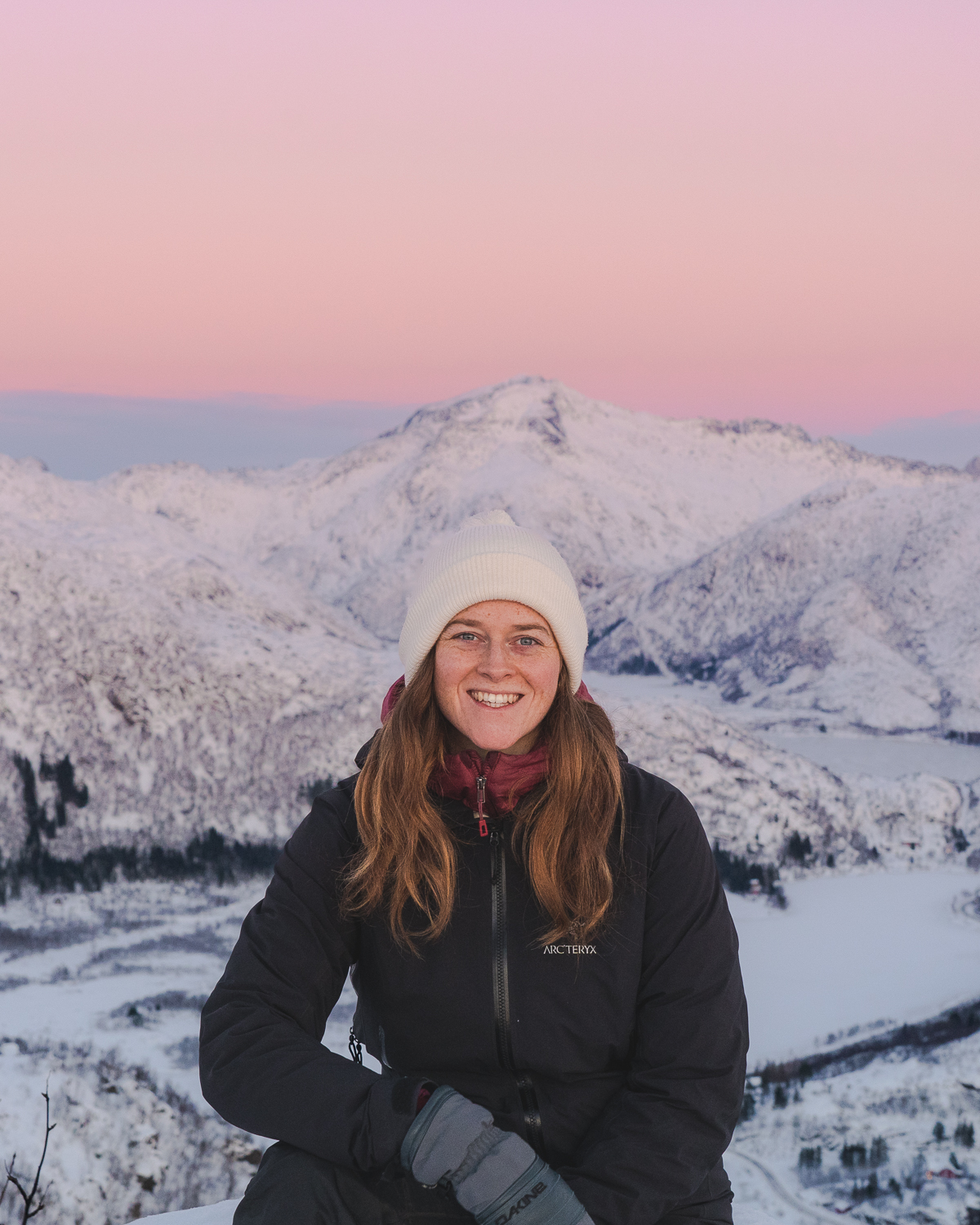
Hannah started That Adventurer after graduating back in 2013 and has documented all of her adventures since then. From backpacking South America to city breaks in Europe, a 3 month road trip across the USA in a self-converted van and 6 years living in Canada, you’ll find posts on all of this.
Hannah specialises in active travel and on That Adventurer you’ll find hiking, walking, biking, skiing and all sorts of active travel guides to allow you to see a destination in an adventurous way.
Now back in Europe, you’ll find new guides as Hannah and her husband spend the next year ‘digital nomading’ from Norway to Portugal, Switzerland to Scotland and places in between.


