Best guide to Visiting the Grand Canyon South Rim
The Grand Canyon South Rim is one of the most popular parts of the Grand Canyon National Park and was the area we ended up visiting (along with the East and West Grand Canyon).
There were a lot of US National Parks that I’d never heard of before our mega road trip around the country but the Grand Canyon was definitely one I had heard of.
I mean, who hasn’t heard of the Grand Canyon?!
What I hadn’t realized is that there are different parts of the Grand Canyon you can visit. It makes sense since the canyon itself is so huge, but it’s not something I’d considered before.
We ended up visiting the Grand Canyon’s South Rim which gave us incredible views and tends to be easier to access than the Grand Canyon’s north rim.
We had. a great few days exploring the park, riding the shuttle bus, and doing some Grand Canyon hikes into the canyon and along the top. We finished each day by watching the sunset into the canyon which truly was just as magical as you might expect.
Visiting the Grand Canyon is a popular day trip or 2-day trip from Vegas and if you’re in the area it’s 100% worth making the drive out here. You just won’t believe how big the canyon is!
So, for those of you who are planning to visit the Grand Canyon’s south rim, check out this Grand Canyon, Arizona guide below which has information on entrance fees, permits, accommodation, what to do at the Grand Canyon United States, and more.

About the Grand Canyon National Park
Ready for a few Grand Canyon facts? The Grand Canyon is a very popular US National Park. It sees around 5.5 million visitors each year and 90% of these go to the Grand Canyon’s South Rim with the rest going to the North Rim.
You may have heard there’s a ‘West Rim’ and whilst this is true in a sense, the West Rim isn’t actually part of the National Park but is owned and operated by the Hualapai Tribe.
The South Rim of the Grand Canyon USA (Grand Canyon Village) is open throughout the year but the North Rim is closed over winter.
Despite the North Rim being just 10 miles/16km across the canyon from the South Rim, it’s about a 220 mile/354km drive between the South Rim and North Rim!
How long is the Grand Canyon? The Grand Canyon is 1 mile deep, up to 18 miles wide, and 277 river miles (446km) long! Safe to say, it’s HUGE!
The 4 areas of the Grand Canyon Nation Park
Think of the Grand Canyon AZ as a giant, stunning puzzle made up of four key pieces: the South Rim, the North Rim, the East, and the West. While each part of the Grand Canyon offers unique experiences, this guide will mainly focus on the South Rim, as well as the closely connected East and West Rims.
- The South Rim: the most popular part of the Grand Canyon National Park. This is where you’ll find famous spots like Mather Point and the Grand Canyon Village.
- The West Rim: You can get here from the South Entrance. Take a scenic drive along Hermit Road or West Rim Drive, where you’ll find some of the park’s most breathtaking viewpoints.
- Grand Canyon West: the newest part of the canyon and is taken care of by the Hualapai Tribe. The main attraction here? The amazing Grand Canyon Skywalk.
- The North Rim: becoming more and more popular over time. While it’s only about 10 miles across from the South Rim, remember that the drive between the two can take roughly 4 hours!
- East Rim: near the park’s east entrance and is home to the Desert View Watchtower.

Weather at the Grand Canyon South Rim
Grand Canyon South Rim weather varies a lot depending on the time of year. Weather in the Grand Canyon South Rim typically ranges from -7°C to the mid-teens from January – April and can reach the 30s in summer.
Whilst that doesn’t sound exceptionally hot or cold you must bear in mind that the weather at the top of the rim is likely to be different to the weather below the rim.
If you’re hiking down into the Grand Canyon it’s likely to be very hot and very dry you’ll need sun protection and plenty of water.

When is the best time to visit the Grand Canyon?
There’s never a bad time to visit the Grand Canyon, each season brings something different to the experience. We visited in April when the weather was warm but not too warm, and it was still busy but hadn’t reached the peak visitor time. I’d recommend visiting in Spring & late fall for a similar experience.
Spring (March to May): This is a beautiful time to visit as the park begins to warm up from the winter chill. Average temperatures range from 29°F (-1°C) to 62°F (17°C). There can still be snow in March and even into April, so pack layers.
Summer (June to August): The park is busiest during this time, with temperatures soaring up to 85°F (29°C). Early mornings and evenings are pleasant, but mid-day can get quite hot. It’s an ideal time for river expeditions but beware of afternoon thunderstorms in July and August.
Fall (September to November): A fabulous time to visit, with less crowd and mild temperatures ranging from 34°F (1°C) to 73°F (23°C). The foliage changing color adds an extra layer of beauty to the landscape.
Grand Canyon in Winter (December to February): For those who don’t mind the cold, this is a peaceful time to visit. The park is quiet, and the snow-covered canyon is stunning. Temperatures range from 20°F (-6°C) to 43°F (6°C). Snowfall can close some areas of the park, especially the North Rim, which is closed from the first heavy snow (usually mid-October or November) until mid-May.
Grand Canyon Map South Rim
Below are a couple of maps of the Grand Canyon National Park South Rim. The first (left) is the official park map and shows various South Rim attractions.
The second (right) is my map that I’ve put together where you can find all the best things to do in the Grand Canyon including the best hikes, museums, and viewpoints.
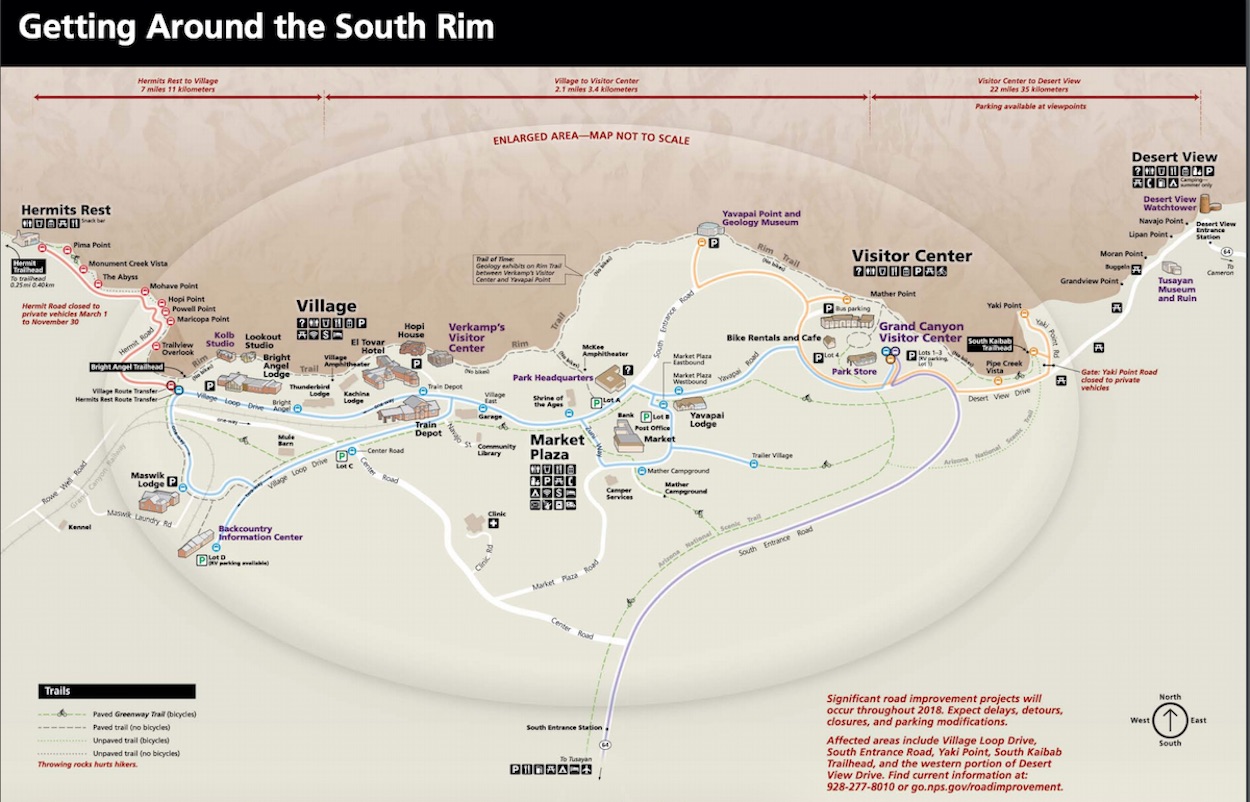
Here’s a map of the main viewpoints and attractions at the Grand Canyon South Rim.

Just click the image to open up an interactive map that you can use on your phone’s Google Maps app.

Grand Canyon permits, passes & fees
Here are some of the following permits, passes, and fees you may need to pay during your Grand Canyon trip.
If you’re planning a visit to the Grand Canyon National Park, there are certain permits you may need to secure depending on the activities you intend to pursue. Here are the various permits and their purposes:
- Grand Canyon Entrance Fee: This isn’t a permit, but it is a necessary fee for accessing the park. The entrance fee for the Grand Canyon is $35 per private vehicle, $30 per motorcycle, or $20 per person on foot or bicycle, valid for 7 days. Alternatively, you can buy an annual parks pass which gets you access to every National Park and Monument across the country for a year for only $80.
- Backcountry Permits for the Grand Canyon: If you plan on overnight hiking and camping anywhere in the inner canyon, you will need a Backcountry Permit. This includes camping in established campgrounds below the rim (Bright Angel, Indian Garden, and Cottonwood Campgrounds) and camping at-large in other areas. The permit costs $10 plus $8 per person per night camped below the rim and $8 per group per night camped above the rim. Applications can be submitted by fax, mail, or in person.
- River Permits: If you’re interested in a self-guided river trip, you will need a River Permit. The process for obtaining one of these is quite competitive and is handled through a weighted lottery system.
- Commercial Filming and Photography Permits: These are required for any commercial filming or photography taking place within the park.
- Special Use Permits: These are needed for special events or activities that provide a benefit to an individual, group, or organization, rather than the public at large. Examples include weddings, scattering of ashes, First Amendment activities, and more.
- Research Permits: Any scientific studies carried out in the park require a research permit.
Remember, permits are in place to protect the natural and cultural resources of the park and to ensure fairness and access to all visitors.
It’s important to plan ahead and secure necessary permits well in advance of your visit as some of them are in high demand and may be subject to quota limitations.
It’s always best to check the official Grand Canyon National Park website for the most recent and detailed information.

How to book Phantom Lodge Grand Canyon
Phantom Ranch is a cool accommodation option within the Grand Canyon National Park. It’s at the bottom of the Grand Canyon, approximately a 7.8-mile hike from the South Rim via the South Kaibab Trail, or a 10-mile hike using the Bright Angel Trail.
If you’re planning well ahead of your trip and looking for a unique place to stay in the Grand Canyon, here’s what you need to know about Phantom Ranch:
- Accommodation Types: Phantom Ranch offers dormitory spaces and private cabins. Dormitories are separate for men and women, each containing 5 bunk beds to accommodate 10 people. The cabins can accommodate 2 to 6 people, depending on their size.
- Reservation Process: Due to its popularity, reservations for Phantom Ranch are in high demand and are typically made through an online lottery system 15 months in advance.
- Amenities and Meals: Given its remote location, amenities are basic but comfortable. Phantom Ranch provides bedding, restrooms, and shower facilities. Meals (breakfast and dinner) are available but must be reserved in advance when you book your stay. Alternatively, you can opt for packed meals. There’s also a canteen where you can purchase snacks and drinks.
- Costs: Dormitory beds are around $70 per person, per night, while cabins start from around $213.50 per night. Meals are extra, with breakfast at $29.50, packed lunch at $24.43, and dinner (steak or stew, veggie options available) ranging from $39.05 – $58.23
- Getting There and Back: Hiking to Phantom Ranch requires a good level of physical fitness due to the length and steepness of the trails. The National Park Service advises against hiking from the rim to the river and back in one day. Mule trips are also available but must be reserved well in advance.

Camping in the Grand Canyon South Rim
There are three Grand Canyon South Rim camping areas. There’s Mather Campground, Trailer Village, and Desert View Campground. The first two are within Grand Canyon Village and Desert View is 25 miles to the east.
Camping in the Grand Canyon National Park is a wonderful way to immerse yourself in its beauty. There are several options available, ranging from developed campgrounds with full facilities to backcountry camping sites for those seeking a more rugged experience.
- Mather Campground: Located on the South Rim, it’s open all year round. No hook-ups are available, but there is a dump station. Reservations are required for camping between March 1 and mid-November, which can be made up to six months in advance through the National Recreation Reservation Service. The camping fee is $18 per site per night.
- Desert View Campground: Also on the South Rim, but near the east entrance of the park, this campground is usually open from mid-April to mid-October. It’s first-come, first-served and has no hookups, though there is a general store nearby. The fee is $12 per site per night.
- North Rim Campground: Open from mid-May to mid-October, reservations can be made up to six months in advance through the National Recreation Reservation Service. There are no hookups, but there is a dump station. The fee is between $18-25 per site per night.
- Trailer Village RV Park: Located on the South Rim, this RV park offers full hookups and can accommodate larger RVs. Reservations are highly recommended and can be made through the park’s lodging concessionaire, Delaware North.
- South Rim Grand Canyon Backcountry Camping: For those who wish to camp below the canyon rim, a Backcountry Permit is required. These campsites include Bright Angel, Indian Garden, and Cottonwood Campgrounds, among others. The permit costs $10 plus $8 per person per night camped below the rim. It’s advisable to apply well in advance due to high demand.
- Tuweep Campground: This remote campground on the North Rim offers a more primitive camping experience. There are only ten sites, and they must be reserved through a lottery system three months in advance.
Remember, all prices and availability may change. Always check the official Grand Canyon National Park website for the most current information before planning your camping trip.

5 Best things to do at the Grand Canyon South Rim Besides Hiking
Here are some of the best things to do at the Grand Canyon’s South Rim.
- Mule Rides: Experience the Grand Canyon from a unique perspective by going on a mule ride. These trips, operated by Xanterra, offer a unique way to see the park. Whether you choose a ride along the rim or a trip into the canyon, it will certainly be an unforgettable experience.
- Sunset/Sunrise Viewing: One of the most magical moments at the South Rim is watching the sunrise or sunset. Yavapai Point and Hopi Point are two of the most popular locations for this. The way the sun illuminates the canyon walls is truly breathtaking.
- Photography: With its dramatic landscapes, the Grand Canyon is a photographer’s dream. The South Rim provides numerous vantage points for capturing stunning shots. Early morning or late afternoon are often the best times for photography when the light is softer.
- Scenic Drive: Take a leisurely drive along Desert View Drive, a 25-mile stretch that offers a number of incredible overlooks and pullouts. Stop at the Desert View Watchtower for panoramic views of the canyon.
- Wildlife Viewing: The park is home to a variety of wildlife. You may spot elk, mule deer, California condors, and more. The best times to see wildlife are early morning and evening when the animals are most active.

5 Best Grand Canyon South Rim Hikes
Looking to do a hike in the Grand Canyon National Park’s South Rim? Here are some of the best hikes at the South Rim Grand Canyon for your Grand Canyon vacation.
- Rim Trail: This mostly flat trail stretches for 13 miles along the rim, offering exceptional views. You can walk a shorter segment and use the shuttle bus to return.
- South Kaibab Trail: This trail provides panoramic views as it descends into the canyon. The hike to Cedar Ridge and back is about 3 miles and is a popular choice for a day hike.
- Bright Angel Trail: This iconic trail offers shade and water, and descends to the Colorado River. It’s a strenuous hike, but even walking a portion of it gives a sense of the canyon’s depth.
- Hermit Trail: For experienced hikers looking for a less crowded path, the Hermit Trail is a great choice. It offers stunning views and a variety of flora and fauna.
- Grandview Trail: This trail is steeper and more challenging but offers some of the most impressive views. The hike to Horseshoe Mesa and back is a strenuous but rewarding day hike.

Best things to do near the South Rim Grand Canyon Arizona
After you explore Grand Canyon National Park, there are plenty of things to do nearby. This part of the US is full of beautiful sights and here are a few of my top recommendations.
- Visit Saguaro National Park: This park in southeastern Arizona is the best place to see the iconic Saguaro cacti that dot its landscape. The park is divided into two sections, the Tucson Mountain District and the Rincon Mountain District, each offering distinct hiking trails and visitor experiences. Take time to explore the Desert Discovery Nature Trail or drive the scenic Bajada Loop Drive.
- Explore Las Vegas: Around 4.5 hours from the Grand Canyon, the vibrant city of Las Vegas provides a stark contrast to the natural beauty of the national park. In Las Vegas, you can watch a world-class show, try your luck at the casinos, dine at gourmet restaurants, or stroll along the famous Strip, experiencing its unique sights and sounds.
- Discover Antelope Canyon: Near Page, Arizona, taking an Antelope Canyon tour is a must-do. This slot canyon is known for its wave-like structure and the beams of direct sunlight radiating down from openings at the top of the canyon, creating a truly magical atmosphere. The canyon is divided into two separate sections, referred to as “The Crack” or Upper Antelope Canyon, and “The Corkscrew,” or Lower Antelope Canyon. Add in a trip to Horseshoe Bend too!
- Check out Hoover Dam: The Hoover Dam is located on the border between Nevada and Arizona. Take a guided tour to learn about the history and construction of the dam, walk across the top, or take a scenic boat tour on Lake Mead, the largest reservoir in the U.S., which was created by the dam itself.
- Visit Petrified Forest National Park: This park is about three hours east of the Grand Canyon and is known for its fossilized trees that have been turned into bright, beautiful stones over millions of years. Visitors can walk along the park’s trails, see the Rainbow Forest Museum’s exhibits, or drive the 28-mile scenic route for panoramic views of the Painted Desert.

How to get to the Grand Canyon South Rim
Here are some basic details on how to get to the South Rim of the Grand Canyon National Park from some of the nearby cities and towns.
Flying to the Grand Canyon
Direct flights to the Grand Canyon National Park are not available, but there are nearby airports that offer convenient routes to the park, whether you prefer to drive or take a shuttle service.
- Phoenix Sky Harbor International Airport (PHX): This busy airport is about a 3.5-hour drive from the South Rim, is the closest major airport to the Grand Canyon, and serves major airlines.
- Flagstaff Pulliam Airport (FLG): This is the nearest city to the South Rim that offers commercial flight services, approximately a 1.5-hour drive away. American Airlines and United Airlines operate from here, with direct flights from Phoenix, Dallas, and Denver.
- Las Vegas McCarran International Airport (LAS): This airport could be a suitable choice if your travel itinerary includes Las Vegas. The journey from Las Vegas to the South Rim is approximately 4.5 hours by car.
Skyscanner is what I use to find cheap flights.
Once at these airports, you can opt to hire a car or take advantage of shuttle services to reach the Grand Canyon.
Driving to the South Rim Grand Canyon
If the Grand Canyon is one of your stops during an extensive American road trip, or if you plan to travel by car, here are some straightforward directions:
- From Phoenix: Follow I-17 North towards Flagstaff, then merge onto I-40 West to Williams. From Williams, take AZ-64 North which leads straight to the Grand Canyon.
- From Las Vegas: Drive on US-93 South, then shift to I-40 East to Williams. From there, AZ-64 North will get you to the South Rim. The distance from Las VEgas to South Rim Grand Canyon is 279 miles taking around 4.5 hours.
- From Flagstaff: Use I-40 West to Williams, then follow AZ-64 North to reach the park. The distance from Flagstaff to Grand Canyon South Rim is about 79 miles (1.5 hours)
I use comparison sites like DiscoverCars and RentalCars to book my car rentals as it’s easy to check prices and compare the best deals!
Always consult the National Park Service website for the most recent updates on road conditions and potential road closures prior to your journey as you put together your personal Grand Canyon guides.

Where to stay near the Grand Canyon South Rim
The good thing about the Grand Canyon being such a popular tourist attraction is that there are a lot of places to stay both within the National Park perimeter or just outside too.
Grand Canyon South Rim hotels
The best place to stay in the Grand Canyon is within the National Park itself! Here are the Grand Canyon lodges inside the boundaries of the Grand Canyon South Rim.
- Yavapai Lodge: A popular Grand Canyon lodge across from the Grand Canyon National Park Headquarters and close to the Grand Canyon South Rim Visitor Center.
- El Tovar Hotel: This hotel features an on-site café and bar, making it a comfortable option for your stay at the South Rim.
- Bright Angel Lodge: With a high customer rating, this is one of the top choices for accommodations near the South Rim.
- Kachina Lodge: Receives excellent reviews, and provides a complimentary shuttle service within a 25-mile radius.
- Maswik Lodge: This lodge features an on-site restaurant and offers a free shuttle service for guests.
- Thunderbird Lodge: Perfectly positioned in the heart of Grand Canyon Village, this lodge has stunning views of the South Rim of Grand Canyon National Park.

Hotels by Grand Canyon South Rim (outside the park)
These hotels near the Grand Canyon South Rim are all highly recommended on Booking.com. They also include glamping and camping options and are super close to the South Rim entrance of the park.
- Grand Canyon RV Glamping: This Williams-based glamping site offers private parking, and air-conditioned rooms with modern amenities, and is close to hiking trails.
- The Aztec Motel & Creative Space: Based in Seligman, it features air-conditioned rooms, and free parking, and is conveniently located 110 km from Ernest A Love Field Airport.
- Little America Hotel Flagstaff: Set within 500 acres of Ponderosa Pine forest, this hotel provides free WiFi, airport shuttle service, an outdoor pool, and on-site dining facilities.
- The Grand Hotel at the Grand Canyon: This 5-star hotel is located in Tusayan, just 11 km from Grand Canyon Village. It features a restaurant, bar, indoor pool, and free WiFi.
- Under Canvas Grand Canyon: Situated in Valle, this unique camping experience offers tent accommodations and an on-site restaurant with locally-sourced, seasonal menus.
- Clear Sky Resorts – Grand Canyon – Unique Sky Domes: Based in Valle, this unique accommodation option provides dome-style rooms, free private parking, a bar, and an American-style restaurant catering to various dietary needs.
- Wander Camp Grand Canyon: This camp offers tent accommodations and is close to Grand Canyon National Park Airport.
Camping at the Grand Canyon
If the campsites inside the Grand Canyon National Park are full then there are plenty of other RV park and campgrounds just outside the Grand Canyon South Rim.
- Ten-X Campground: Just 4 miles south of the Grand Canyon South Rim entrance. Standard, non-electric sites are $10 per site, per night. Suitable for RV and tents.
- Grand Canyon Camper Village: In Tusayan, there’s the Grand Canyon Camper Village which is privately owned. RV sites with hookups are available.
- Free camping near the Grand Canyon: There’s also plenty of free camping near the Grand Canyon. Check out this post to see how to find free camping in the USA.

What to know before visiting the Grand Canyon South Rim
Before you visit the Grand Canyon National Park, be sure to check out the list below which includes what you should know before your trip.
- Weather and Climate: Be aware that the Grand Canyon experiences varied climates and temperatures, ranging from mild and sunny to cold and snowy. Always check the weather forecast before heading to the park.
- Hydration and Sun Protection: The desert environment can cause dehydration quickly, especially during the hotter months. Carry plenty of water, use sunscreen, and wear a hat and sunglasses to protect yourself from the sun.
- Plan Your Activities: The Grand Canyon is vast, and it’s essential to plan your activities ahead of time. Whether you’re interested in hiking, biking, sightseeing, or rafting, knowing what you want to do can help you maximize your time and experience.
- Grand Canyon South Rim elevation: The Grand Canyon sits at a high altitude, which can cause altitude sickness for some visitors. Symptoms include dizziness, shortness of breath, and nausea. Be sure to acclimate yourself slowly, stay hydrated, and limit physical exertion during the first few days of your visit.
- Respect the Wildlife: The Grand Canyon is home to a wide array of wildlife. Remember to keep a safe distance from wild animals and avoid feeding them. This helps keep you safe and protects the animals as well.
- Prepare for Hiking: Even if you’re not a hiker, you’ll likely do some walking. Wear comfortable shoes.
- Accommodation: Book your accommodations well in advance, especially during peak season. Options range from lodges and hotels within the park to campgrounds and RV parks.
- Permits: Certain activities, like overnight hiking, river trips, and some guided tours, require permits. Check the park’s website to see if you need one for your planned activities.
- Respect the Park: The Grand Canyon is a protected national park. Follow Leave No Trace principles, including packing out all trash, staying on trails, and respecting historical and cultural artifacts.
- Time of Visit: Consider the time of year you plan to visit. Summer can be extremely hot and crowded, while winter may present challenges with snow and closed roads. Spring and fall usually offer more moderate temperatures and fewer crowds.
- Grand Canyon hours: The Grand Canyon is open 365 days a year 24/7.
- Check Park Updates: Before your trip, check the National Park Service’s website for any park alerts or updates. This could include trail closures, weather warnings, or other information that could impact your visit
- Grand Canyon Shuttle Bus: The Grand Canyon National Park shuttle bus service is not mandatory but is offered to help reduce congestion and improve visitor experiences. There are several different shuttle routes that can take you to various viewpoints, trailheads, and facilities and I’d recommend it since parking can be limited during peak visitation times. Some areas, like Hermit Road, are accessible by shuttle bus only during peak season (March 1 – November 30).

What to pack for the Grand Canyon South Rim National Park
Below are some of the things you should remember to pack for your Grand Canyon trip. Whether you’re going for a day or planning to camp overnight, packing right can make a big difference to how much you enjoy your trip, the list below focuses on day visits with some moderate hikes.
- Hiking boots: Good hiking boots or shoes like trail runners will protect your feet on the trails.
- Comfortable clothing: Breathable, quick-drying clothes are best. Remember to pack both warm and cool clothing as temperatures can fluctuate.
- Rain jacket: A lightweight, waterproof jacket can be a lifesaver during sudden showers.
- Hat and sunglasses: Protect your eyes and skin from the sun’s harmful rays.
- Gloves and warm hats (in colder months): Temperatures can drop significantly, especially at night.
- Backpack: A comfortable day pack to carry your essentials is a must.
- Water bottles or a hydration pack: Hydration is crucial, especially during the hot summer months.
- Headlamp (if camping or hiking): Useful for navigating in the dark.
- Camera: To capture the stunning views!Binoculars: For wildlife spotting or enhancing your view of the canyon.
- Snacks: High-energy snacks like granola bars, nuts, and dried fruit are good options.
- First aid kit: Include band-aids, antiseptic wipes, tweezers, and any personal medication.
- Sunscreen: The sun can be intense at high elevations, so high SPF sunscreen is essential.
- Lip balm: The dry air can cause chapped lips.
Remember that this list might need adjustments based on the season and your personal needs. Always check the weather forecast and plan accordingly and follow the Leave No Trace principles to preserve the Grand Canyon for future generations.

FAQs on visiting South Rim Grand Canyon Arizona
Where is the Grand Canyon located?
How big is the Grand Canyon?
How wide is the Grand Canyon?
When does the Grand Canyon open?
What city is the Grand Canyon located in?
Is the South Rim Grand Canyon worth seeing?
How long does it take to do the South Rim of the Grand Canyon?
Can I drive in the Grand Canyon South Rim?
Final thoughts on this Visiting Grand Canyon Guide
Visiting the Grand Canyon South Entrance is truly a bucket list America experience. The dramatic landscapes, incredible hiking trails, and range of activities make it one of the best places to visit in America.
If you’re on an extended USA road trip like we were or are more local to the area, be sure to check out these things to do in Vegas for free, this guide and Antelope Canyon tour review. You should also head over to Utah and check out Zion National Park which isn’t too far away, or even these things to do in Bryce Canyon National Park. I’d highly recommend a Utah Mighty 5 Road Trip if you have the time!
Last Updated on August 2, 2023 by Hannah
Hannah started That Adventurer after graduating back in 2013 and has documented all of her adventures since then. From backpacking South America to city breaks in Europe, a 3 month road trip across the USA in a self-converted van and 6 years living in Canada, you’ll find posts on all of this.
Hannah specialises in active travel and on That Adventurer you’ll find hiking, walking, biking, skiing and all sorts of active travel guides to allow you to see a destination in an adventurous way.
Now back in Europe, you’ll find new guides as Hannah and her husband spend the next year ‘digital nomading’ from Norway to Portugal, Switzerland to Scotland and places in between.