Local’s Guide: Do you need to own a car in Vancouver? 5 reasons to own a car and 7 reasons not to
Vancouver, British Columbia, is a beautiful city located in Western Canada. Known for its stunning views, outdoor sports, and multicultural population, Vancouver has a lot to offer its residents.
However, one of the most pressing questions for people moving to Vancouver is whether owning a car is necessary.
The answer is, it depends.
While there are many public transportation options available in Vancouver, such as buses, the Skytrain, and car-share services, having a car can make certain activities more accessible. For example, if you enjoy hiking or skiing, having a car makes it easier to access the beautiful mountains located just outside the city.
Looking for more things to do in Vancouver and nearby? Check out my Vancouver travel guides which are full of information on the best things to do in Vancouver, the best Vancouver restaurants, and detailed guides for each of the main neighborhoods.
That being said, if you live in or near the city centre and primarily use public transportation, you may not need a car. Vancouver has an extensive public transportation system that can take you virtually anywhere in the city.
Moreover, if you work or go to school in the city, it may be more convenient, and not to mention far cheaper, to take public transit or bike instead of driving due to heavy traffic during peak hours.
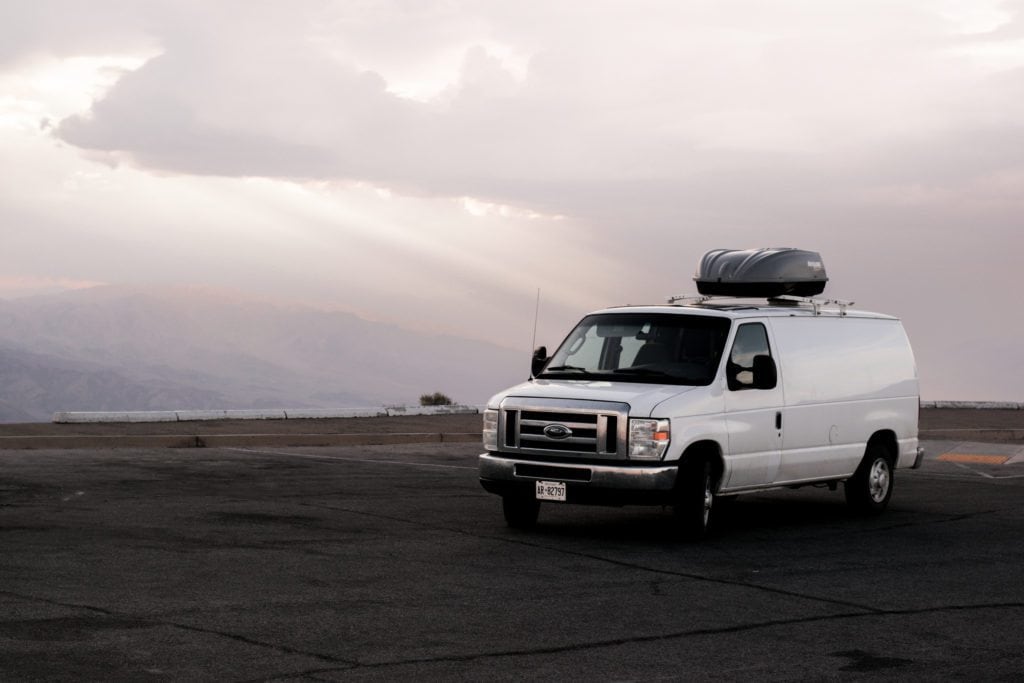
When I was living in Vancouver my husband and I had our trusty white van, Elvis, but we had friends without cars and only used our car at weekends. The rest of the week we pretty much didn’t use our car.
Deciding whether you need to own a car in Vancouver is a very personal decision. This blog post considers the pros and cons of owning a car in Vancouver to help you decide whether you need a car in Vancouver BC.
Pros of Having a Car in Vancouver
Having a car in Vancouver is good for outdoorsy people

For those who love the outdoors, having a car in Vancouver can open up a world of possibilities.
With its stunning mountains, forests, and trails, Vancouver is a hiker’s paradise and there are so many great hikes near Vancouver.
While there are some Vancouver hikes accessible by public transit, public transit options are limited, and you may find yourself restricted to a small number of hikes that are accessible. Having a car allows you to explore the hiking trails further afield.
With a car, however, you can easily explore the hiking trails and natural beauty of Vancouver and the surrounding areas.
Renting an Evo carshare vehicle for weekend trips is a great option for those who don’t own a car but there are some issues with EVO disconnecting when you take it to areas without a cell signal.
Use my code 227NTN4Z to join Evo for free and get $25.00 of free drive time.
Download the app (iOs & Android) or visit evo.ca
This means you cant be locked out of the Evo and have to pay a rather large fee to get it towed back into an area with service. While this is rare, I’ve heard stories of it happening, especially on the Sunshine Coast
Owning a car in Vancouver also allows for greater flexibility and independence when hiking. If you like to get up early to start your outdoor adventures or stay out late, public transportation schedules may not always work for you. Having your own car allows you to come and go on your schedule without worrying about missing the last bus or train.
My friends who didn’t own a car in Vancouver would still get plenty of hiking done at weekends, but at the back of their minds, there’s always the issue of making sure you get back in time for the last bus. This led them to have to run the last section of some trails to make sure they didn’t miss it!
While it’s true that you can meet people on Facebook hiking groups who are willing to offer lifts, you can’t beat the flexibility of having your own car.
In addition, outdoorsy people in Vancouver tend to have a lot of gear. There are different gear for hiking, camping, climbing, biking and more.
Having a car to transport this gear is far easier than having to carry it all onto the bus, or walk it several streets until you find an Evo.
Use my code 227NTN4Z to join Evo for free and get $25.00 of free drive time.
Download the app (iOs & Android) or visit evo.ca
While some people say that having a car can provide great storage space for all your outdoor equipment, it’s important to note that theft is a significant problem in Vancouver.
I would not recommend leaving valuable items in your car for extended periods. This is true even if you have underground parking. I have several friends whose expensive down jackets were stolen from ‘secure’ underground parking in their building multiple times.
For outdoor enthusiasts in Vancouver, having a car is a must. It provides the flexibility, convenience, and storage space necessary to fully enjoy all the outdoor adventures that Vancouver and the surrounding areas have to offer.
So if you’re someone who loves adventure and the great outdoors, having a car in Vancouver is definitely worth considering.
Easier commute depending on where you live and work
If you have a difficult or long commute in Vancouver, owning a car can be a great idea.
Unless you live and work either downtown or within easy distance of a Skytrain station, matching up bus schedules can be impossible and lengthen your commute time greatly.
Having a car gives you more control over your commute and can significantly reduce the time you spend commuting.
Vancouver is a large and sprawling city, and many neighbourhoods are not well connected by public transit. For those who live in these areas, owning a car can be a lifesaver. It can be difficult to find a job that is easily accessible by public transit, and a car can make it possible to commute to a wider range of job opportunities.
Additionally, owning a car can save you time and energy, allowing you to spend more time with family or pursue hobbies outside of work.
Another advantage of owning a car in Vancouver is the ability to avoid crowded public transit during peak hours. Rush hour on the Skytrain and buses can be extremely stressful, and owning a car can allow you to avoid these crowds altogether.
This can be especially beneficial for those who work unconventional hours or have unpredictable schedules, as it allows for more flexibility and the ability to avoid rush hour altogether.
Owning a car in Vancouver can be a good idea if you have a difficult or long commute. It gives you more control over your commute and can significantly reduce the time you spend commuting.
Out-of-city road trips

While it’s true that Vancouver has an extensive public transportation system, having a car can open up a whole world of road trip possibilities just outside the city limits.
If you’re someone who loves to explore and wants to visit towns and areas further out from the city, having a car is a must.
For example, just outside of Vancouver are several towns worth visiting that offer a range of outdoor activities and attractions.
Squamish is a favourite destination for many locals and tourists alike, with its many hiking and backcountry skiing areas, breweries, and restaurants.
Similarly, Chilliwack and the Fraser Valley are underrated areas with extensive hiking trails, beautiful camping spots, and stunning mountain views.
Golden Ears National Park and EC Manning Park are also popular destinations for outdoor enthusiasts, both of which are much easier to access with a car.
Of course, public transportation options can still be useful for accessing some of these destinations. Buses to Squamish via the Squamish Connector, or to Whistler with EpicRides, can be a convenient and cost-effective way to travel.
Additionally, buses from Vancouver to cities like Kamloops and Kelowna can give you access to further away areas as well. There are also Park buses to Garibaldi and Golden Ears.
While public transportation options exist for accessing some of these areas, having a car provides the flexibility and freedom to fully explore and experience everything these destinations have to offer.
So, if you’re someone who loves road trips and exploring areas outside of Vancouver, you may deem having a car essential.
Trips across the border to the US

If you’re living in Vancouver and looking to explore the United States, having a car can make crossing the border much easier.
With Vancouver situated right on the border, there are plenty of great day or weekend trips you can take down south. However, public transit options can be limited, especially if you want to go further than just the immediate border towns.
One of the first major towns you’ll come across after crossing the border is Bellingham. Situated near to Mt. Baker, it’s an excellent location for hiking and skiing.
However, without a car, getting to Mt. Baker can be difficult. While there are bus options available, they can be infrequent and not always reliable. Having a car allows you the flexibility to explore the area on your own schedule, without being limited by public transit schedules.
Further south of Bellingham is Seattle, which can be accessed in about three hours by car from Vancouver. While there are public transit options available, such as the Amtrak train, they may not always be the most convenient or cost-effective option.
By having your own car, you can take advantage of the more direct and flexible travel options available. Plus, with a car, you can easily explore other nearby destinations like the Olympic Peninsula or even Portland, Oregon.
Overall, having a car can make exploring the United States from Vancouver much easier and more convenient. It provides the flexibility to travel on your own schedule and explore areas that may not be easily accessible by public transit.
Access to provincial ski resorts

Vancouver is known for its great skiing opportunities, but if you want to experience the best slopes, you’ll need a car.
While public transit access to Grouse Mountain and Cypress Ski Area is available, it is limited and not the best option for a truly good skiing experience.
Owning a car in Vancouver makes it much easier to reach these destinations, as well as other ski resorts located further out of the city.
If you’re serious about skiing, you’ll want to head further afield to locations such as Revelstoke and Sun Peaks, which are both over 5 hour’s drive east of Vancouver.
With a car, you can take all the gear you need and head out early, avoiding the crowds and making the most of your skiing day. Plus, you won’t have to worry about relying on limited public transportation schedules or the added costs of hiring a car for the day.
If you’re not keen on owning a car, there are still options available. You can park an Evo at Grouse Mountain and save on parking costs while also having a convenient ride back to your destination.
Additionally, there are shuttles available to Cypress Mountain and Mt Seymour, and public buses run up to the foot of Grouse Mountain. However, these options can be limiting and may not provide the same flexibility as having your own car.
Owning a car in Vancouver can significantly enhance your skiing experience. With the freedom to travel where you want and when you want, you’ll be able to make the most of the amazing skiing opportunities British Columbia has to offer.
Cons of having a car in Vancouver
Difficulty and cost of parking in Vancouver

Having a car in Vancouver can be a disadvantage due to the high cost of parking fees.
The city has reduced the amount of free curbside parking available, which means it’s both harder to find somewhere to park, and it’s more expensive when you do find somewhere to park. This can be a real inconvenience, especially if you live or work in areas where parking is restricted.
In addition to paying for parking on the street, many buildings in Vancouver charge extra fees for parking. This can be a significant expense, often adding an extra $100 or more to monthly rent payments. While having a guaranteed parking spot is convenient, it also means that you have to pay more each month just to have a place to park your car.
When I lived in the west end, we paid an extra $60 a month to park our car in the alley behind our building. I know that some buildings in Yaletown charge $150+ a month for a car parking space, and not every building rental includes a parking spot.
If your building doesn’t have parking you can buy a local parking permit. These are restricted to small boroughs of Vancouver and the cost varies depending on which part of the city you live in.
The permits are expensive but usually cheaper than your building will charge you. For example, a West End parking permit is $425 per year.
In addition, this doesn’t guarantee you a parking spot so in busier areas you may need to drive around a bit to find somewhere to park your car and this could still be a good 10+ minute walk from your building.
In instances like that, it’s really no different to relying on Evo or Modo.
Use my code 227NTN4Z to join Evo for free and get $25.00 of free drive time.
Download the app (iOs & Android) or visit evo.ca
The cost of gas in Vancouver
The cost of gas in Vancouver is one of the most significant disadvantages of owning a car in the city.
Gas prices in Vancouver are consistently higher than in other cities in Canada and the United States, with the cost of a litre of gas often exceeding $1.80 and it’s not uncommon for it to be over $2 per litre.
This high cost of gas is due to several factors, including city taxes, the lack of refineries in the region, and the high demand for gas in the area.
The high cost of petrol in Vancouver can have a significant impact on the budget of car owners in Vancouver, particularly those who rely on their vehicles for commuting or running errands.
A daily commute can easily add up to hundreds of dollars per month in gas costs alone, which can be a significant financial burden. This can be particularly challenging for those who live in areas without access to public transit or who have long commutes to work.
Moreover, the high cost of gas in Vancouver can limit the amount of driving that car owner can do, particularly for those on a tight budget. For instance, they may not be able to afford to take weekend trips or drive to more remote areas of British Columbia, which can limit their access to outdoor recreational activities.
This can be a significant downside for those who enjoy exploring the beautiful natural landscapes that the province has to offer.
Additionally, the high cost of gas in Vancouver can discourage some individuals from owning a car altogether, which can be inconvenient for those who need a vehicle for work or other reasons.
For instance, if someone works in a job that requires them to travel across the city or outside of it, they may find that owning a car is the most practical option. However, the high cost of gas can make it difficult for them to justify the expense, leading them to seek alternative modes of transportation.
This is one of the major benefits of using Evo to get around Vancouver. You don’t need to pay for the gas you use. While you need to pay the upfront cost if you book an Evo that needs refuelling, you’re able to claim this money back through the app. So essentially the gas is free!
The high cost of gas in Vancouver is a significant disadvantage to owning a car in the city. It can have a significant impact on the budget of car owners, limit the amount of driving that they can do, and discourage some individuals from owning a car altogether.
While there are certainly benefits to owning a car in Vancouver, the cost of gas is an important factor that needs to be taken into consideration before making a decision
Traffic

One of the biggest downsides of owning a car in Vancouver is the traffic.
Vancouver is known for its gridlock, especially during rush hour and on Friday evenings leaving the city and Sunday evenings coming back. Traffic between Whistler and Vancouver and Abbotsford and Vancouver is particularly bad at weekends.
Though traffic in the city itself is nowhere near as bad as in other major cities like London and LA, commutes can be long and frustrating, causing stress and wasting valuable time.
One major contributing factor to traffic congestion in Vancouver is the limited number of major roads and highways. There are only a few main routes in and out of the city, so when there is an accident or other issue, it can cause significant delays for drivers.
Additionally, with a growing population and an increasing number of cars on the road, the situation is likely to get worse.
Another factor that contributes to traffic in Vancouver is the city’s layout. Vancouver is situated between mountains and the ocean, which means that there are limited areas for road expansion.
As a dog walker in Vancouver, I used my bike to get from house to house. I would often beat cars while cycling through downtown Vancouver since I wasn’t stuck in traffic. And, it’s not uncommon for us to get overtaken by a cyclist on Lions Gate bridge and fail to catch it up before we’ve reached the other side.
If you’re travelling through the downtown core of Vancouver, up to Kitsilano and over to Main Street you’ll find using a bike much quicker than a car on many occasions.
The high cost of car insurance in BC

Car insurance in British Columbia, particularly in Vancouver, is known for being incredibly expensive.
This is largely due to the fact that there is a single government-run insurance provider, called ICBC, which has a monopoly on all vehicle insurance in the province. Because there is no competition to drive prices down, ICBC has been criticized for its high rates and lack of options for consumers.
In addition to the lack of competition, there are several other factors that contribute to the high cost of car insurance in BC. One major factor is the high number of accidents and claims in the province. BC has one of the highest rates of car accidents in Canada, which puts a strain on the insurance system and drives up rates for everyone.
Another factor is the rising cost of vehicle repairs and medical expenses, which are covered by ICBC. As these costs continue to increase, ICBC is forced to raise rates in order to cover its expenses.
There is also concern that ICBC has been mismanaged for several decades, which has contributed to its financial woes and the high cost of insurance for consumers.
For drivers in Vancouver, the high cost of car insurance can be a significant drawback to owning a car. The monthly premiums can easily add up to thousands of dollars per year, making car ownership much more expensive than it might be in other parts of Canada.
This can be particularly challenging for young drivers or those with lower incomes, who may struggle to afford the high insurance rates.
When living in Vancouver we had the highest no-claims discount possible and clean driving records and were still paying over $100 a month to insure our van at the lower end of the insurance coverage options.
While recent changes to ICBC’s system have resulted in some cost savings for drivers, many still feel that the overall cost of car insurance in BC is too high.
Until there is more competition in the market or ICBC is reformed to be more efficient and cost-effective, car insurance is likely to remain a significant financial burden for drivers in Vancouver and throughout the province.
Car maintenance costs

Owning a car comes with a range of maintenance costs that can quickly add up. Regular maintenance such as oil changes, tire rotations, and brake pad replacements can cost hundreds of dollars per year.
And, if something more significant goes wrong with the car, the costs can skyrocket. Repairs such as engine or transmission replacements can easily cost thousands of dollars, leaving car owners with hefty bills to pay – we would know, we’ve been there with our van!
Furthermore, BC’s climate can take a toll on cars, with rainy and snowy weather leading to more frequent maintenance needs. Salt on the roads during winter months can also lead to rust and corrosion, which can be expensive to repair.
In addition, if you’re planning on visiting mountainous areas outside of the city, you’ll need snow tires or all-season tires from October to April as a legal requirement.
This means you’ll need to own two sets of tires and find somewhere to store one of them when not in use. While you can sometimes use a storage locker in your building, this isn’t always an option so you’ll need to factor in the cost of tyre storage too.
Oh, and unless you fancy changing the tyres over yourself you’ll need to pay twice a year to have them switched.
Overall, the cost of maintaining a car can add up quickly, leaving car owners in Vancouver with hefty bills to pay each year.
Public transit in Vancouver is good
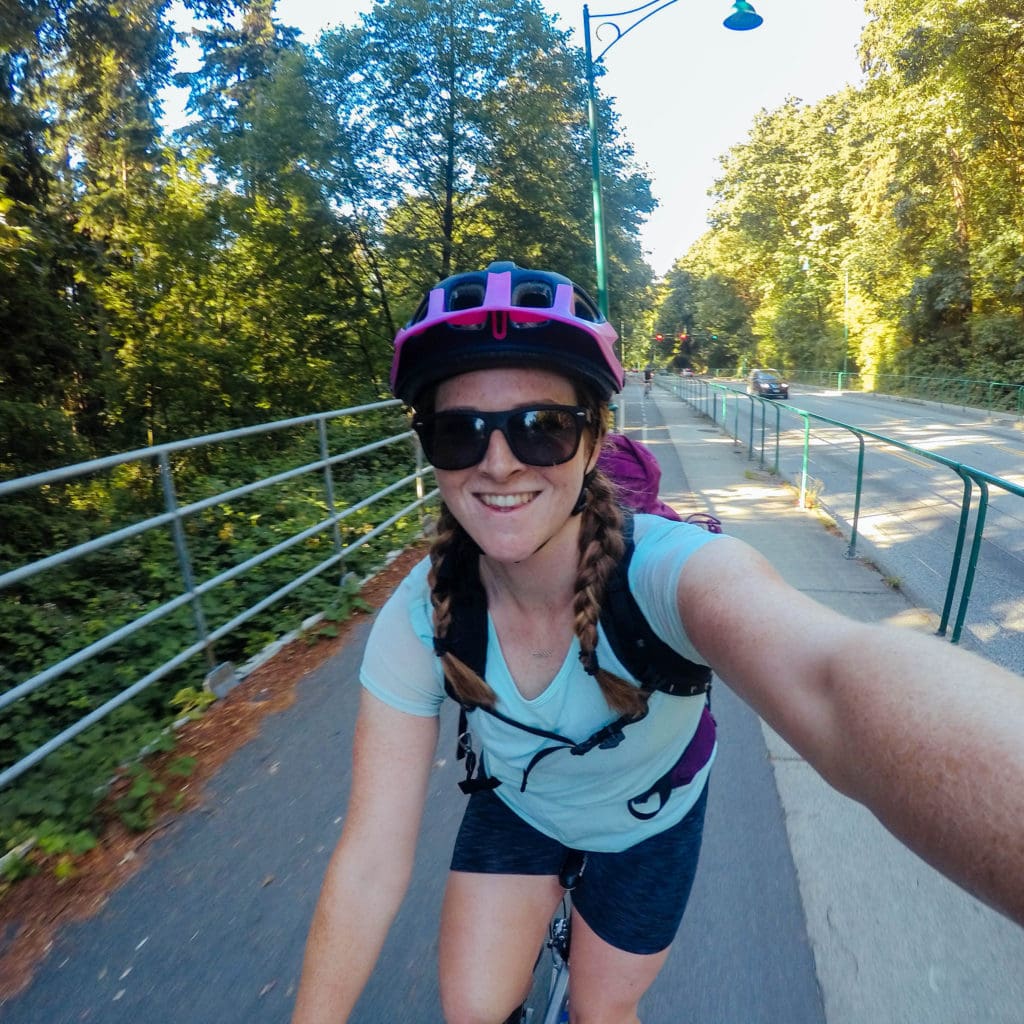
Vancouver’s public transit system is known for being one of the best in North America.
The Skytrain is a rapid transit system that covers much of the city, with three lines and 53 stations and is currently being extended.
It is efficient, reliable, and offers frequent service, even during peak hours. The Skytrain runs from early morning until late at night, making it easy to get around the city at any time of day.
In addition to the Skytrain, there is an extensive network of buses that run throughout Vancouver and the surrounding areas.
Buses are a great option for getting around the city, as they provide access to many areas that the Skytrain does not. Many bus routes run frequently, with some buses arriving every few minutes during peak hours.
The buses are also wheelchair accessible, making them a great option for people with disabilities. And if you get a flat tyre on your bicycle or get tired of cycling, you can load your bike onto the front of the buses around Metro Vancouver.
Plus, there are bus lanes in many areas of the city so the buses can usually ‘skip traffic, where cars cannot. So, even with the stopping and starting of buses, it can still be quicker to use them to get around Vancouver than to use your car.
Vancouver is also known for its bike-friendly infrastructure, with an extensive network of bike lanes and paths throughout the city.
This makes biking a viable option for commuting to work or getting around the city. In addition, the city has several bike share programs, including Mobi, which allows users to rent bikes on a short-term basis.
While many Vancouverites love to complain about the cycle lanes I think they’re one of the best things about Vancouver. It shows it’s a forward-thinking city that’s actually doing something to help people live more active lifestyles while benefitting the environment.
Do they take away space for cars? Sure, but adding a new car lane only encourages more drivers, adds to air pollution, increases bad health and doesn’t stop traffic in the long run.
With such a robust public transit system, it’s easy to see why many people in Vancouver choose not to own a car. The cost of owning a car, including insurance, gas, and maintenance, can add up quickly.
By using public transit, residents can save money while still getting around the city quickly and easily. Plus, using public transit is also an environmentally-friendly option, as it helps to reduce traffic congestion and air pollution.
Vancouver drivers are bad
If you search “why are Vancouver drivers…” the first option that comes up is “why are Vancouver drivers so bad?”. Vancouver drivers are often featured on bad driver threads of Reddit and there are multiple posts a day with dashcam footage of drivers doing stupid stuff in Vancouver.
Don’t even get me started on how bad they are at roundabouts, how poor they are at indicating or how much they chop and change lanes without seeming to check their mirrors.
It’s no wonder the cost of insurance is so high!
Alternatives to getting around Vancouver without a car
Cycling in Vancouver

Vancouver has an extensive bike network that is rapidly expanding, with several local streets being turned into special cycling routes.
There are quiet roads designated for cyclists where there are roadblocks to prevent cars from driving fast, separated cycle lanes over some of the main bridges including Lions Gate, Burrard and Cambie Street Bridge, and cycle lanes all over the city.
Additionally, rental bikes through the Mobi cycles app can be found on major bike routes, with bike stands every few blocks.
You can unlock the bikes using an app and pay for the time you use them before re-locking them to a bike stand close to your destination.
However, it’s important to note that Vancouver is a rainy city, with more than half the days of the year experiencing rain. But, if you’ve got a good waterproof jacket, waterproof pants and some bike lights then it’s not that big a deal cycling in the rain.
I would know since I used to be out on my bike and walking dogs for 6+ hours a day in the rain!
Helmets are also required by law and not wearing one can result in a fine.
Another thing to bear in mind is that bike theft is rife in Vancouver. It’s probably one of the most common crimes in the city.
Bike theft happens in the middle of the day, from the bike room in buildings downtown and in the evenings or overnight. I once had my bike seat stolen from my bike while I was at a yoga class!
To prevent your bike from being stolen you should use a solid D-lock. Cables and chains just won’t make it past the bike thieves in Vancouver. If you have a mountain bike or a fancy-looking city/hybrid/e-bike/touring bike NEVER leave it unattended and locked up outside. It’s just not worth it.
And make sure you get it insured. Many bikes cost more than people’s vehicles so you don’t want it stolen.
You can also register bikes with Project 529 which can help you be reunited with your bike if it is stolen.
Another top tip is to make sure you don’t have anything that’s easily removable on your bike. This includes quick-release wheels, seats, bike lights and bags/water bottles etc. Chances are they’ll get nicked.
This sounds like a lot, but bike theft is rampant in all major cities around the world. Get a cheap bike like one from Canadian Tire (we had a cheap supercycle bike that seemed to be theft-proof. When our bike room in our building got broken into, they actually moved our bike out of the way so they could get to better ones), and buy a good lock and you should be good.
In practice, many people we knew in Vancouver would have two bikes. One that’s cheaper and used for getting around the city and a fancier one they used for road biking or mountain biking.
Keep the fancy one inside your actual apartment, buildings will say you can’t but most of them turn a blind eye in practice.
Vancouver SkyTrain

The Vancouver SkyTrain is a fast, efficient, and popular way to get around the city and surrounding suburbs.
Though there are areas of the city with poor Skytrain connections (West End, Kitsilano etc), it still connects much of the city, with two main lines running through southern Burnaby and into the north end of Surrey, and another line heading down to Richmond.
However, many people may find that there’s no station within walking distance of their homes so rely heavily on buses instead.
If you want to make the most of the SkyTrain to get to work, you’ll want to live in a neighbourhood that’s well-served by SkyTrain.
These neighbourhoods tend to be more built up and have more high-rise buildings due to their proximity to the metro.
Despite these limitations, the SkyTrain is still the fastest way into the city by a significant margin.
Buses in Vancouver
Vancouver’s bus network is extensive, with major bus terminals at most Skytrain stations.
If you live in Richmond, South Vancouver, Surrey, or near the main universities (UBC and SFU), you’ll become very familiar with the bus network as it’s the main way to get around.
There are some lines that fill up very quickly and so you may need to wait for several buses to pass before you can get on one. This is one of the reasons owning a car or a bike in Vancouver is a good idea.
Our local bus was the 23 and it would often be full during rush hour.
Vancouver to North Vancouver Sea Bus

The Sea Bus connects the North Shore to the city, and it leaves every 15 minutes between Waterfront Station in downtown Vancouver and Lonsdale Quay in North Vancouver.
If you live in North Vancouver you can take the SeaBus instead of driving across one of the two connector bridges. It’s often much quicker and stress-free compared to waiting in traffic on one of the bridges.
Plus, you’re allowed to take your bikes on the Sea Bus so you can use it to make your cycling journey easier.
The SeaBus ride provides great views of the city and stops at Lonsdale Quay, where you can explore some of the great shops.
You can use your compass card or your phone/usual credit/debit card to pay for tickets.
Taxi, Uber, and Lyft
As of late 2020, Uber and Lyft have finally been allowed to operate in Vancouver. Before this date, these companies were banned to protect the taxi industry in the city.
The introduction of Uber and Lyft was welcomed by most Vancouverites because the yellow cab mobile apps were really quite terrible and wouldn’t turn up or would refuse you a journey (even though this is illegal).
Now, you can see Uber and Lyft all over the place making it super easy to get a ride around the city.
Modo & Evo Carshare
Modo & Evo offers a carshare service that is very popular throughout the city.
Evo uses small hybrid Toyota cars with roof racks that allow you to transport up to two bicycles and two pairs of skis or snowboards.
Simply turn on your app and it shows you where all available nearby cars are. Go to a car and unlock it with the app.
You can then drive the car around the city, park it, and pay for how much you used.
The best bit is you don’t need to pay for parking on most occasions since if you park in the Evo home zone, it’s free. You can also park where it says ‘residents only’ or at the City of Vancouver metred parking spots.
Any petrol costs incurred are reimbursed too.
Use my code 227NTN4Z to join Evo for free and get $25.00 of free drive time.
Download the app (iOs & Android) or visit evo.ca
While most people use Evo for short journeys, you can use it for day trips and longer durations too. We’ve seen Evos in Banff National Park! The day rate maxes out at around $100 a day and since you’re not paying for petrol or insurance coverage it can be cheaper than renting a car through a standard rental company.
If you live in a neighbourhood in Vancouver where Evo is in use (this includes North Vancouver and even Victoria on Vancouver Island), you can often find an Evo within a view locks of your location.
Some areas are harder to find Evos such as the West End downtown where we used to live. We found them easy to find in the morning before 8 am or after 7 pm but tricky to get during the day.
What’s it like to drive in Vancouver?
Navigation & Traffic
While Vancouver is an easy city to navigate in a car with a grid system in most urban neighbourhoods, the downtown core can be tricky with several one-way streets.
Rush hour traffic is generally tolerable with the exception of certain pinch points such as the Ironworkers bridge and Lions Gate heading to North Vancouver.
Roadworks and construction can significantly add to your journey time and coming back from Whistler or east of Vancouver on Sunday afternoon or early evening is always a long journey due to traffic.
How to use public transit in Vancouver
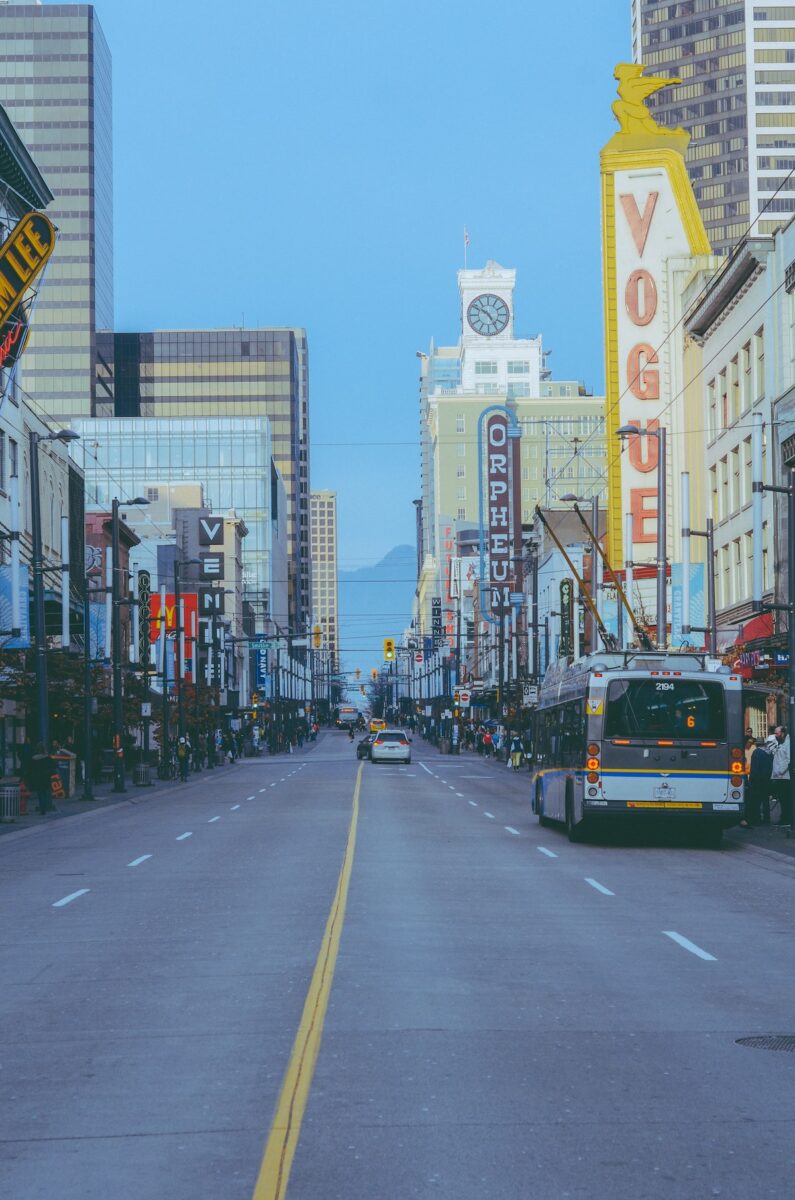
To use public transportation in Vancouver, you can use either a compass card, which can be bought at the airport or Skytrain stations around the city, or a debit or credit card with contactless or tap enabled.
You can also use your phone if you have Apple or Android pay enabled.
Just remember to tap in and out at the barriers when using the trains, or to tap your car when you get on a bus.
You can use these methods for the SeaBus, Bus, and Skytrain services.
Prices with a compass card are slightly cheaper and if you register it online you can set up auto-top-up so that you’re never without credit on the car.
If you plan to use the Shaw bikes or Modo and Evo carshare, you will need to download their respective apps and register with them, including uploading a photo of your driver’s license for Evo and Modo. It can take a few days for them to accept your license so plan in advance for when you need it.
Is car insurance expensive in Vancouver?
Car insurance is known to be quite expensive in Vancouver due to the single government-run insurance and registration agency called ICBC.
As there is no competition on price, ICBC is the only option for car insurance.
There are ICBC Autoplan Brokers all around the city and you need to register your vehicle and get your car insurance through them. Brokers sell additional comprehensive coverage insurance on top of the base insurance set by ICBC.
ICBC is not very popular among BC residents and is often subject to criticism.
The company recently changed how it works to introduce a no-fault system which managed to lower bills by 20%. This controversial move was made by reducing bureaucracy and limiting the number of cases that end up in court arbitration.
How much does it cost to maintain a car in Vancouver?
Maintaining a car in Vancouver can be quite expensive due to the high cost of insurance and registration.
Second-hand cars can range from $4,000 for an older vehicle to over $15,000 for a newer one, with a 12% provincial sales tax added on top.
Insurance and registration must be renewed annually, and the prices are set by the government through ICBC Autoplan brokers.
Prices can vary depending on driving history and car type but expect to pay anywhere from $1,500 to $3,000 per year.
Maintenance costs can be relatively affordable, with local mechanics generally cheaper than in the United States and basic services costing around $50.
Parking permits are also required in most Vancouver neighbourhoods near commercial districts and can cost between $50 and $100.
You’ll also need to factor in petrol costs which will vary greatly depending on how much you plan to drive.
Final thoughts on do you need to own a car in Vancouver?
Owning a car in Vancouver BC is not a necessity for many people due to the availability of alternative transportation options such as public transit, bike lanes, and car-sharing services like Evo.
The associated costs of owning a car including gas, insurance, parking, and maintenance can also be a hindrance.
However, owning a car can be worth it for those who prioritize outdoor activities and need a car to access places outside of the city.
Ultimately, the decision to own a car in Vancouver will depend on your individual needs and priorities. If you can afford to own a car and pay the associated costs without too much financial stress then sure, getting a car will allow you greater flexibility.
However, if it’s going to be hard for you to maintain the costs of running a car then using Evo, cycling and making the most of public transit or friends willing to drive you places means you can still explore the city and its surroundings without the additional costs.
Ultimately for us, owning a car was worth it. Owning our van meant we could travel whenever we wanted and since it was a campervan we could sleep in it overnight.
We saved so much money on hotels in doing so! We’re also both very outdoorsy people and like to travel to areas inaccessible by public transport, or down logging roads where you can’t take rental cars or Evos.
In these instances, having our own car was the only way to get to these places.
Use my code 227NTN4Z to join Evo for free and get $25.00 of free drive time.
Download the app (iOs & Android) or visit evo.ca
Last Updated on July 11, 2023 by Hannah

Hannah started That Adventurer after graduating back in 2013 and has documented all of her adventures since then. From backpacking South America to city breaks in Europe, a 3 month road trip across the USA in a self-converted van and 6 years living in Canada, you’ll find posts on all of this.
Hannah specialises in active travel and on That Adventurer you’ll find hiking, walking, biking, skiing and all sorts of active travel guides to allow you to see a destination in an adventurous way.
Now back in Europe, you’ll find new guides as Hannah and her husband spend the next year ‘digital nomading’ from Norway to Portugal, Switzerland to Scotland and places in between.


