A guide to visiting Yosemite National Park
If you’re planning on visiting Yosemite National Park you’re in for such a treat!
Yosemite California is on a lot of people’s USA bucket lists and with over 4 million visitors every year, it sure is a busy national park.
We visited in mid-March during our three-month road trip across the USA and I was amazed by the beauty of it. It’s no wonder it’s such a popular place to visit.
From towering waterfalls to a beautiful valley floor, incredible Yosemite hikes such as Half Dome and Upper and Lower Yosemite Falls just to name two, wildlife and more. When you plan a trip to Yosemite, you’re planning something that you’ll remember for a lifetime.
If you’re planning on visiting Yosemite National Park then be sure to check out this guide below for your trip to Yosemite.
It includes the low-down on places to stay at Yosemite, the best things to do in Yosemite National Park, and some of the best hikes in Yosemite, California too. I’ve also included a packing list for Yosemite, a guide to the Yosemite entrance fees and permits you might need, and more useful information to help you plan your trip to one of my favorite National Parks on the West Coast of America.

About Yosemite National Park
Yosemite National Park is full of waterfalls, world-famous cliffs (think Half Dome and El Capitan), Tuolumne meadows and ancient giant sequoias. It’s an American icon and is a popular destination on many peoples’ California travel itineraries. It’s easily accessible from big cities such as San Francisco and so if you want to escape from city noise you can find a spot of quiet in Yosemite Valley.
Where is Yosemite National Park located?
Yosemite National Park is in the state of California. It’s towards the east of the state and not too far from the border with Nevada. It’s about 3.5 hours away from San Francisco, and just under 5 hours drive north of Los Angeles.
Yosemite National Park maps
Below are a couple of maps that will help you get your bearings as you begin to plan your Yosemite National Park California trip. The first is the National Parks Service map and the second is my Google map which you can use on your phones of computers.
It has all the best things to do, the best Yosemite hikes, and more information pinned onto it so you can see where things are in relation to each other.

This map of Yosemite National Park (click to enlarge) shows the entire boundaries of the park which will help you with the basics of planning a Yosemite trip.

Click the image (or here) to view this interactive map of Yosemite National Park California.
You can see another Yosemite map here for the Yosemite Valley area which you’ll undoubtedly be visiting.

How to get to Yosemite National Park
Yosemite National Park is a popular stop off on a California road trip and it’s a great place to add to your itinerary if you’re visiting Los Angeles or San Francisco.
If you are visiting California on vacation and need to rent a car to travel to Yosemite, I highly recommend checking out RentalCars.com which makes it super easy to compare prices so you get the best deal.
Nearest international airports to Yosemite
The closest international airports to Yosemite National Park are
- Fresno-Yosemite International (FAT) 64.8 miles
- Merced Airport (MCE) 71.4 miles
- Oakland International (OAK) 150.3 miles
- San Francisco International (SFO) 169.2 miles
- San José International (SJC) 187.5 miles
Skyscanner is what I use to find cheap flights.
San Francisco to Yosemite National Park CA
Getting to Yosemite National Park from San Francisco takes around 4 hours. The distance between San Francisco and Yosemite is about 190 miles / 305 km. From San Francisco, get on US-101 S, then take I-80 E and CA-99 S to CA-120 E in Manteca. Follow CA-120 E directly to the Yosemite National Park entrance.
For flights to Yosemite, there is no airport in Yosemite National Park. The nearest major airport is Fresno Yosemite International Airport (FAT). You can fly from San Francisco International Airport (SFO) to FAT. From FAT, you will need to rent a car and drive to Yosemite, which is about a 1.5 to 2-hour drive.
Alternatively, you can take an Amtrak train or Greyhound bus to Merced, CA. From Merced, YARTS (Yosemite Area Regional Transportation System) buses run to Yosemite National Park.
I use comparison sites like DiscoverCars and RentalCars to book my car rentals as it’s easy to check prices and compare the best deals!

Best Yosemite Tours
If you’re visiting California and don’t have a car, you can also book various tours from places like San Francisco, Fresno, and Oakhurst amongst others. These tours then include your transport to and from the city or your hotel to the park. You’ll also benefit from a guide who’ll teach you more about the park and take you to the best spots.
Here are some of the best Yosemite National Park tours.
- Yosemite National Park – Full Day Tour from San Francisco: Visit Yosemite National Park on this day trip from San Francisco. Upon arrival in the state’s most famous national park with a guided tour and free time to explore on your own.
- Full-Day Small Group Yosemite & Glacier Point Tour Including Hotel Pickup: Travel into Yosemite Valley through the Southgate, then spend the day viewing and photographing some of the valley’s best features such as Bridalveil Falls, Half Dome, Yosemite Falls, and Yosemite’s high country. Hike down the 4-Mile Trail (during the spring to fall) or choose to remain on the bus. Lunch will be provided and can be eaten along the trail. National Park entrance fees are included.
- Yosemite Highlights Small Group Tour: See some of the Yosemite National Park highlights on this small-group guided tour with local pickup and lunch included.
- Yosemite Valley Private Hiking Tour: Spend the day immersed in nature on a full-day hiking tour of Yosemite National Park. See the dramatic slopes of Half Dome and North Dome, experience the force of Yosemite Falls, and hike a variety of trails to see Mirror Lake and Spider Caves. Opt for a tour of an old Pioneer village and cemetery if you want. Guides carry water purification and first aid equipment and all profits from this tour support Yosemite youth summer camp programs.

Permits, passes and entrance fees to Yosemite National Park
Entrance fees to Yosemite National Park are required for all visitors, and the money generated from these fees is used to fund important projects within the park.
Additionally, some special activities within the park may require a separate permit.
Below I’ve included a detailed breakdown of the entrance fees, permits, and passes you might need when visiting Yosemite National Park.
Please note that fees and requirements are subject to change, so it’s advisable to check the National Park Service’s official Yosemite National Park website or contact the park directly for the most up-to-date information.
Entrance fees for Yosemite National Park
The Yosemite National Park entrance fee costs $35. This gives unlimited entry for 1 vehicle over the course of seven consecutive days. If you’re visiting by bike or on foot then a pass costs $20 and motorcycles cost $30.
If you’re planning on visiting other National Parks over the course of a year, then America the Beautiful – National Parks and Federal Recreational Lands Annual Pass is worth buying. This pass costs $80 and allows unlimited entrance to more than 2,000 federal recreation areas, including Yosemite, for one year from the month of purchase.
Yosemite camping fees
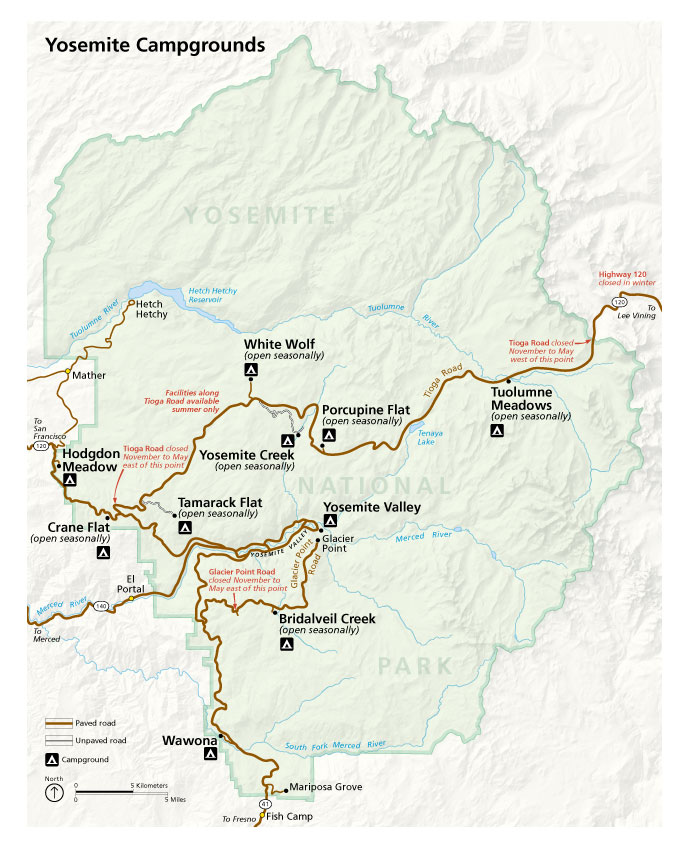
Here’s a map of the campsites at Yosemite National Park. This doesn’t show each individual Yosemite campground, more the areas in which they are.
Yosemite National Park camping gets super busy and booked up. It’s best to reserve in advance to guarantee a spot.
Campsites cost between $6 – $26. The cheapest camping in Yosemite is at Camp 4 in Yosemite Valley and is charged per person, per night. No RVs/trailers are allowed on this campsite.
If you’re interested in camping in Yosemite National Park you can find more information on the campsites in Yosemite National Park, check the official Yosemite website.
Wilderness permits for Yosemite
If you plan on backpacking or making any other type of overnight stay in the Yosemite Wilderness you’ll need to get a Yosemite wilderness permit.
You do not need a wilderness permit for day hikes with the exception of Half Dome (see below).
Each trailhead has limited wilderness permits which protect the trails and stop them from getting too busy. It’s recommended you make a reservation so as not to be disappointed if you can’t hike the trail you hoped to.
Making Yosemite reservations for wilderness camping costs $5 per confirmed reservation and $5 per person. 60% can be reserved ahead of time and the other 40% are offered as first come, first served and are available from 11 am the day before your hike as long as permits are available.
Permits for Half Dome
There are different permits depending on whether you’re day hiking Half Dome or backpacking Half Dome.
A maximum of 300 hikers is allowed each day (about 225 day hikers and 75 backpackers).
All the information you need can be found with regard to these types of reservations for Yosemite can be found here – with the key points picked out below.
Permits for day hiking Half Dome
Permits to hike to the top of Half Dome are required every day of the week once the cables (used for helping you climb the rock) are up. The cables are normally up from the Friday of Memorial Day weekend in May and come down on Columbus Day in October. However, this isn’t always the case, check the status here).
A permit costs $20. $10 when you place your reservation and another $10 when you collect it.
Permits for backpacking Half Dome
If you’re planning on breaking the hike up over two (or more) days then you’ll need to get a wilderness permit too. You should apply for the permit to hike Half Dome at the same time as applying for your wilderness permit (see above).
Remember that all fees, permits, and regulations are subject to change, so always check the National Park Service’s official Yosemite National Park website or contact the park directly for the most recent information before planning your trip.

5 Best things to do in Yosemite National Park Besides Hiking
Want to know what to add to your Yosemite National Park itinerary? Here are a few ideas to get you started when it comes to what to do in Yosemite! This is just a snapshot of the awesome things to do in Yosemite National Park.
- See the views from Tunnel View: Get the iconic panoramic viewpoint of Yosemite Valley, including El Capitan, Half Dome, and Bridalveil Fall.
- Visit the Ansel Adams Gallery: A historic gallery featuring the work of famed photographer Ansel Adams and other artists, offering photography classes and workshops.
- Yosemite Valley Visitor Center: Ideal starting point for visitors with exhibits, a theater, and information about the park’s history, geology, and wildlife.
- Mariposa Grove of Giant Sequoias: Home to over 500 mature giant sequoias, including the Grizzly Giant and the California Tunnel Tree.
- Attend a Stargazing Program: Join a ranger-led program to explore the night sky away from light pollution, with telescopes often provided.
5 Best Yosemite hikes
Love hiking? Be sure to look into doing at least one of these best hikes in Yosemite National Park. These Yosemite hiking trails are all spectacular.
- Mist Trail: A stunning hike leading to Vernal and Nevada Falls, offering some of the park’s most iconic views.
- Half Dome: A challenging and iconic hike that takes you to the top of Yosemite’s most famous granite dome; requires a special permit.
- Yosemite Falls Trail: A strenuous hike that leads you to the top of North America’s tallest waterfall.
- Sentinel Dome and Taft Point Loop: Moderate hike offering spectacular panoramic views of Yosemite Valley and El Capitan.
- John Muir Trail: A long-distance trail traversing Yosemite’s wilderness from Yosemite Valley to Mount Whitney; requires a wilderness permit.
AllTrails is my go-to hiking app for finding, planning, and navigating while I’m out on the trails. With offline maps on AllTrails+ you can be confident you’re still on the right track, even without mobile signal.
Best things to do near Yosemite National Park
There’s so much to do in and around Yosemite National Park. Here are a few of the places we visited near Yosemite National Park.
- Mammoth Lakes: Visit the Mammoth Mountain Ski Resort, which is a famous ski, snowboard, and mountain biking destination. There are also some super pretty hot springs in Mammoth Lakes.
- San Francisco: Explore the Golden Gate Bridge, a world-renowned architectural icon and one of the most photographed bridges globally.
- Death Valley National Park: Visit Badwater Basin, the lowest point in North America, and experience the surreal landscapes of this intense desert environment.
- Lake Tahoe: Enjoy water activities such as boating, paddleboarding, and kayaking, or hit the slopes at world-class ski resorts in the winter.
- Drive Big Sur: One of the most beautiful stretches of road in America. See all the best places to stop on this Big Sur Road trip guide.

When is the best time to visit Yosemite National Park?
Here is a breakdown of what to expect when visiting Yosemite National Park during each season, with details about temperatures, crowds, and road closures for your Yosemite trip planning.
Yosemite in Spring (March – May):
Spring is a beautiful time to visit Yosemite, as the snow begins to melt and waterfalls become most impressive and thunderous.
Average temperatures range from 50°F to 70°F (10°C to 21°C). However, higher elevations can still be cold, and snow can linger.
Spring is less crowded than summer but does start to get busier. You should note that not all roads are open in early spring; for example, Tioga Pass and Glacier Point Road often remain closed until late May or June due to snow.
Summer (June – August):
Summer is the peak season for Yosemite, which means the park is at its busiest and most crowded, especially in Yosemite Valley.
Daytime temperatures are typically warm, ranging from 70°F to 90°F (21°C to 32°C), though nights can be cooler. All park roads, including Tioga Pass and Glacier Point Road, are usually open by late May or June.
While the waterfalls start to slow down as summer progresses, the trails are all open and the meadows are in full bloom.
Fall (September – November):
Fall is a quieter and more peaceful time to visit Yosemite, as the summer crowds start to thin out. The weather is generally mild, with average temperatures ranging from 60°F to 80°F (16°C to 27°C), but it gets cooler as winter approaches.
The waterfalls may not be as robust as in the spring, but the changing colors of the foliage are beautiful to see.
By late fall, road closures due to snow are possible, particularly on Tioga Pass and Glacier Point Road.
Winter (December – February):
Winter in Yosemite is magical, with a blanket of snow covering the landscape. It’s the least crowded season and while you can visit Yosemite in December, it comes with the most restrictions.
Average temperatures can range from 30°F to 50°F (-1°C to 10°C), but colder snaps are common. Most high-country roads, like Tioga Pass and Glacier Point Road, are closed for the season due to snow.
Badger Pass Ski Area opens for snow sports, and the valley is quiet. If you’re prepared for the cold, it’s a unique and tranquil time to experience the park.

Where to stay in Yosemite National Park
Being such a popular place, there’s quite a lot of choice when it comes to the question of where to stay at Yosemite National Park including some great accommodation in Yosemite National Park itself.
Below are some of the best places to stay in Yosemite National Park.
Best hotels in Yosemite National Park
Yosemite offers a variety of places to stay, ranging from simple tents to luxurious rooms at The Majestic Yosemite Hotel. It’s essential to reserve your stay early, especially if you want to stay inside the park. Here are some top Yosemite hotels inside the park:
- The Ahwahnee: This is the only AAA Four-Diamond hotel in the park, known for its stunning views.
- Valley Lodge, Yosemite: A great choice for families, this lodge is conveniently located near Yosemite Falls and other major attractions.
- Curry Village: Known for its historic canvas tent cabins, which have hosted travelers since 1899. Offers amazing views of Glacier Point and Half Dome.
- High Sierra Camps: These are 5 camps located along a loop trail. They offer tent cabins and meals at each camp, allowing you to hike with a lighter pack.
Hotels Near Yosemite National Park
If you prefer to stay outside the park, consider these highly-rated options (all scoring above 8 out of 10 on booking.com):
- Tenaya Lodge at Yosemite: Located in the mountains near the park, this lodge offers air-conditioned rooms with modern amenities, a full-service spa, a restaurant, a fitness center, concierge services, and various recreational activities. It is also pet-friendly.
- Little Valley Inn: Features cozy rooms with garden views, satellite TV, air conditioning, and free WiFi. Breakfast options are available, and the area is great for hiking and cycling.
- AutoCamp Yosemite: Offers a unique glamping experience, with free bikes, an outdoor pool, a 24-hour front desk, and a bar. The area is ideal for hiking, skiing, and cycling.
- Evergreen Lodge at Yosemite: Provides a seasonal outdoor pool, games room, restaurant, and bar. The lodge accommodations include private bathrooms and seating areas. Guests can enjoy cycling and fishing in the nearby area.
For those seeking a more upscale experience, or traveling in a group, consider renting cabins or lodges on VRBO. These can be a cost-effective option when the expenses are shared among a group.

Camping at Yosemite National Park
Camping in Yosemite National Park is a wonderful experience that lets you truly immerse yourself in its natural beauty.
Here’s what you need to know if you’re planning on camping in Yosemite:
Reservations: Most campgrounds in Yosemite require reservations, especially during the busy summer months. These reservations can be made several months in advance and they often fill up quickly. It’s essential to plan ahead and book your campsite as early as possible. There are a few campgrounds that operate on a first-come, first-served basis, but relying on them can be risky, especially during peak times.
Costs: The cost of camping varies depending on the campground and the size of your group. Standard campsites usually range from $6 to $26 per night. Group campsites are more expensive.
Facilities: Most campgrounds in Yosemite are equipped with basic facilities like drinking water, picnic tables, fire rings, and restrooms with flushing toilets. However, not all of them have shower facilities, so you might need to visit nearby Curry Village or Housekeeping Camp in Yosemite Valley to take a shower for a small fee. Campgrounds also provide food lockers to store your food securely, which is crucial because bears are active in the area. It’s essential to store all your food and scented items properly to keep both you and the bears safe.
Campfire Rules: Campfires are allowed only during specific hours, typically in the evening. There are restrictions during high fire danger periods, so it’s important to follow the rules and regulations closely. Only use the fire rings provided and never leave your campfire unattended.
Limitations: There is a 30-night camping limit within Yosemite National Park each calendar year; however, from May 1 to September 15, the camping limit in Yosemite is 14 nights, and only seven of those nights can be in Yosemite Valley or Wawona.
Wildlife Precautions: One of the unique aspects of camping in Yosemite is the possibility of encountering wildlife. While it’s exciting to observe animals in their natural habitat, safety should always come first. Always keep a safe distance from wildlife, and never feed them. Remember to use the bear-proof food lockers for storing any food or scented items. Never leave anything left out unattended at your campsite.
Campground and RV Parks near Yosemite National Parks
Alternatively, you might prefer to stay at. campground just outside of Yosemite. While more expensive, these typically have more facilities available.
- High Sierra RV Park & Resort: Situated in Oakhurst near the National Park with its own swimming pool and waterfalls! High Sierra RV Park also has cabins available.
- Yosemite Pines RV: Has large pull-through sites for those big RVs and tent spots with everything in between! Is 22 miles from the park and also has yurts and Yosemite cabins too.

What to know before traveling to Yosemite National Park California USA
Here are some things you should know before visiting Yosemite National Park:
- Yosemite Entrance Fees: The entrance fee for a private vehicle is $35, and it’s $30 for a motorcycle. Individual visitors on foot or bike pay $20. These fees provide you with a 7-day pass. Prices are subject to change, so check the NPS website for the most up-to-date information.
- Yosemite Opening Hours: Yosemite National Park is open 24 hours a day, 365 days a year. However, some areas, roads, and facilities close seasonally due to snow.
- Yosemite Weather Conditions: Yosemite experiences all four seasons. Summers are warm, and winters are snowy and cold. Always check the weather forecast before your Yosemite National Park trip and prepare for rapidly changing conditions.
- Road Closures: Some park roads, including Tioga Pass and Glacier Point Road, close seasonally due to snow, generally from late fall to late spring.
- Camping Reservations: Most campgrounds in Yosemite require reservations, which can be made months in advance and fill up quickly.
- Wildlife Safety: Always observe animals from a distance, do not feed wildlife, and use bear-proof food lockers in campgrounds to store food and scented items securely.
- Limited Cell Service: Cell phone reception is spotty or non-existent in many parts of the park. Plan accordingly and inform someone of your itinerary before you leave.
- Bring Layers: Due to varying elevations and rapidly changing weather, it’s wise to dress in layers that can be easily added or removed.
- Hiking Preparedness: If you plan to hike, always carry water, snacks, a map, and a small first aid kit. Inform someone of your plan and estimated return time.
- Pack It In, Pack It Out: Help preserve Yosemite’s beauty by packing out all trash and following Leave No Trace principles.
- Limited Services: While there are some dining and shopping options in Yosemite, they are limited. Consider bringing necessary supplies, including food and fuel, with you.
- Yosemite Parking Limitations: Parking spaces can be challenging to find, especially during peak season. Arrive early and consider using the free park shuttle service.
- Accessibility: Yosemite offers some accessible facilities, including campgrounds, picnic areas, and trails, but not all areas of the park are accessible.
- Yosemite Crowds: Millions of people visit Yosemite from April – October and the park gets very busy. From spring to autumn aim to arrive in the park before or after 9 am and 5 pm to enjoy some quiet
- Yosemite Shuttle Bus: The Yosemite Shuttle System provides free, convenient transportation within Yosemite Valley California, and to some key locations outside the Valley. It operates in a loop, making it easy for you to hop on and off. Using this helps ease congestion in the park.

What to pack for visiting Yosemite National Park
This packing covers the basics of what you may need for your Yosemite vacation. It may need to be adjusted based on the season, your specific plans, and the length of your stay.
Always check the weather forecast and current park conditions when deciding what to pack for your Yosemite USA adventure.
- Clothing Layers: Pack clothes that you can layer, as temperatures can vary significantly between day and night. Include a lightweight, moisture-wicking base layer, an insulating layer like a fleece, and a waterproof or windproof outer layer.
- Good Footwear: Bring comfortable and durable hiking boots or trail running shoes, especially if you plan to explore trails.
- Backpack or Daypack: A comfortable pack is essential for carrying your essentials during day hikes and excursions.
- Reusable Water Bottle or Hydration System: Staying hydrated is crucial. Bring a reusable water bottle or hydration bladder to refill and carry with you.
- First Aid Kit: Include basics like bandages, antiseptic wipes, blister treatment, pain relievers, and any personal medications.
- Maps and Compass or GPS Device: Cell service can be spotty, so physical maps or a GPS device can be lifesavers when navigating trails.
- High-Energy Snacks: Pack calorie-dense and easy-to-carry snacks like nuts, energy bars, and dried fruit for sustained energy during activities.
- Sun Protection: Bring sunglasses, a wide-brimmed hat or cap, and sunscreen with a high SPF.
- Insect Repellent: Depending on the season, mosquitoes and other insects can be a nuisance.
- Flashlight or Headlamp with Extra Batteries: Essential for navigating in the dark, especially if you are camping or hiking in the early morning or evening.
- Multi-tool or Knife: A compact tool can be handy for a variety of tasks while camping or hiking.
- Camera and Binoculars: For capturing memories and observing wildlife from a safe distance.
- Camping Gear: If you plan to camp, bring a tent, sleeping bag rated for the season, sleeping pad, camp stove, cooking utensils, and food storage containers.
- Bear Canister: If you are backcountry camping, a bear-resistant container for food and scented items is required in most areas of the park. You should also pack bear spray.
- Charging Equipment: Portable chargers, extra batteries, and charging cords for cameras and other devices.
- Personal Identification and Permits: Carry your ID, any necessary permits (like a wilderness permit for backcountry camping), and your park pass or entrance fee receipt.
- Cash and Cards: Some locations in the park might not accept cards, so it’s a good idea to carry some cash as well.
- Toiletries and Personal Items: Including toothbrush, toothpaste, soap (biodegradable if possible), and any other personal care items.

FAQs on this Yosemite Guide + How to Visit Yosemite
What is the best month to visit Yosemite?
What should I see for the first time in Yosemite?
What is the best way to see Yosemite?
How many days should you visit Yosemite?

Final thoughts on this Yosemite Travel Guide
Yosemite National Park is an absolutely beautiful National Park with so many iconic landmarks for you to discover and see with your own eyes.
From watching the climbers on El Capitan, or taking on the chains of Half Dome, to trekking through scenic trails, or simply absorbing the tranquil atmosphere from a valley viewpoint, the park is simply stunning as this Yosemite National Park travel guide has hopefully shown.
To make the most of your visit, plan ahead by considering the season, preparing for varying weather conditions, and utilizing the convenient and eco-friendly Yosemite Shuttle System.
If you’re staying in the area and are looking for more things to do, be sure to check out this guide to the best hikes in Death Valley National Park, as well as the other best things to do in Death Valley California. Extend your road trip further with a trip to Las Vegas, or check out these cool places to stop on California’s Highway 101.
Alternatively, view all of my America travel guides!
Last Updated on August 16, 2023 by Hannah
Hannah started That Adventurer after graduating back in 2013 and has documented all of her adventures since then. From backpacking South America to city breaks in Europe, a 3 month road trip across the USA in a self-converted van and 6 years living in Canada, you’ll find posts on all of this.
Hannah specialises in active travel and on That Adventurer you’ll find hiking, walking, biking, skiing and all sorts of active travel guides to allow you to see a destination in an adventurous way.
Now back in Europe, you’ll find new guides as Hannah and her husband spend the next year ‘digital nomading’ from Norway to Portugal, Switzerland to Scotland and places in between.


