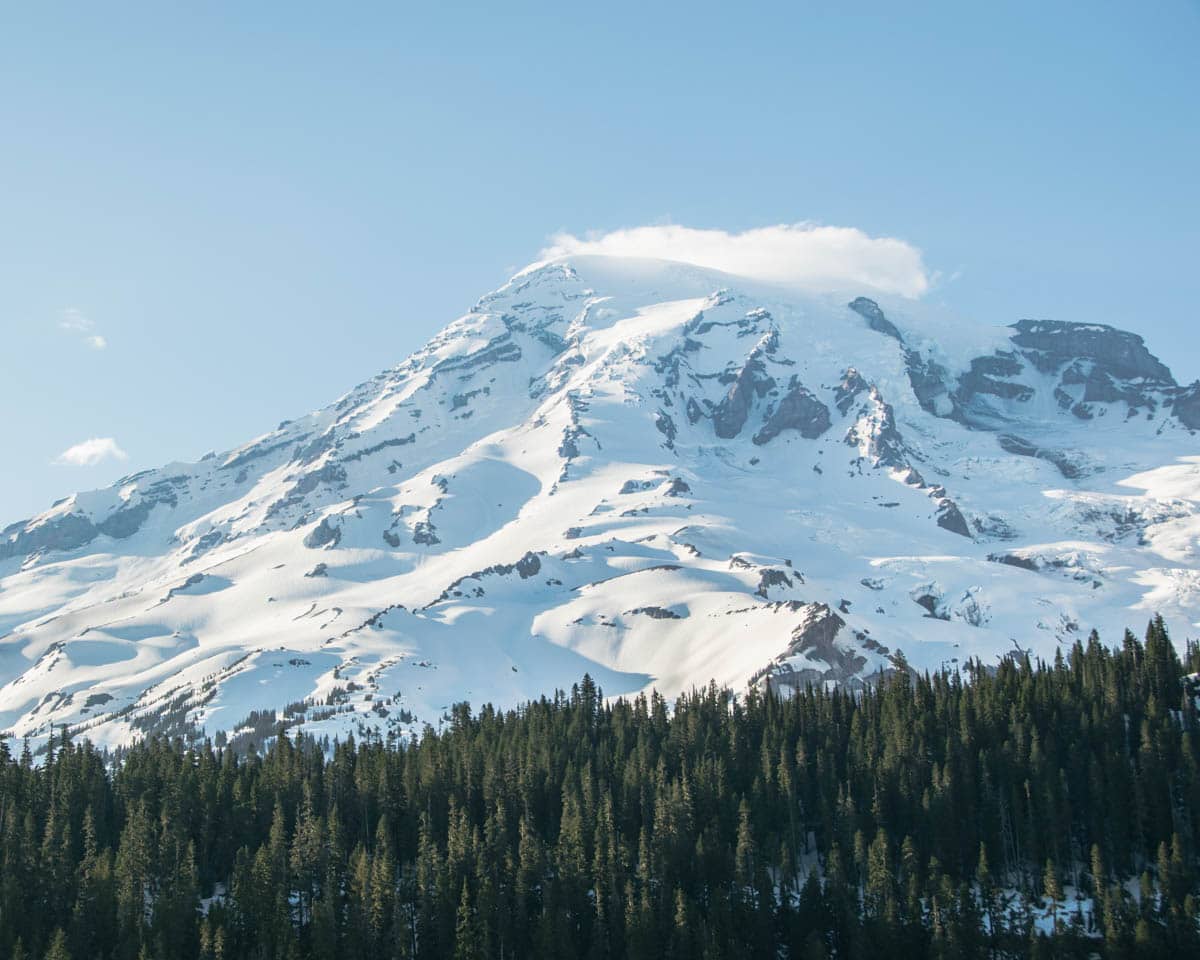
Guide to visiting Mt Rainier National Park, WA
Mt Rainier National Park is up there my favorite US National Parks visited during our three-month road trip across America.
In the state of Washington, Mount Rainier National Park seemed a bit wilder than some of the other parks we visited during our trip to America. There are numerous multi-day hikes, wildlife galore, and some of the most incredible waterfalls and mountain views I’ve ever seen.
Visiting Mt Rainier when we did mean there was still plenty of snow and the lakes were frozen (mid-May), but this made it even prettier.
Plus, we were treated to an absolute beauty of a sunset and I saw my first ever bear! It happened to be wandering across the road once we turned a corner right after I’d just said to my husband; “I wonder if we’ll see any bear in Canada” (Canada is where we were heading after our USA trip). We then spent the next 6 years living in Canada and yes, we did see a lot of bears while there.
If you’re planning to visit Mt Rainier then be sure to check out this Mt Rainier travel guide below for the key things to know before visiting Mt Rainier National Park, Washington.

About Mt Rainier National Park
Mt Rainier is a National Park in Washington State, USA. The park gets its name from the massive Mount Rainier with stands at a whopping 4392m (14,410ft) above sea level!
Mt Rainier is an active volcano and is the most glaciated peak in the Lower 48 States. The lower slopes of this volcano are covered in forest which gives way to wildflower meadows and then an icy ring around the crater.
Mt Rainier National Park was the fifth National Park in the US and covers 236,381 acres with Mount Rainier pretty much in the middle.
The Mount Rainier area can be divided into 5: Longmire, Ohanapecosh, Sunrise, Carbon River / Mowich and Paradise, and Mt Rainier. That’s not to say they’re all super developed and some are more developed than others, but each one does act as a good base for exploring the rest of the park.
There are several visitors’ centers but only the Henry M Jackson Memorial Mount Rainier Visitor Center in Paradise is open all year round.
The park gets very busy in summer and it’s recommended to visit mid-week if possible and enter outside the hours of 10 am-2 pm to avoid the longest queues.

Mt Rainier National Park Maps
Below are a couple of basic Mount Rainier National Park maps that you can use when planning your trip. Do not rely on them for direction when you’re in the park as it’s unlikely you’ll have cell service.

This Mt Rainier map shows you a basic layout of the park. You can find other park maps, including a Mt Rainier hiking map here.

Click to view this interactive map of Mount Rainier National Park which includes some of the best things to do in Mount Rainier and the best hikes in the park.

How to get to Mt Rainier National Park
Mt Rainier National Park is in Washington State, USA. It’s around 138 miles north of Portland and the distance from Seattle to Mt Rainier is between 55-90 miles depending on which of the Mt Rainier entrances you arrive at. Because of its location, it’s possible to do a Mt Rainier one-day trip without too much effort.
When it comes to how to get to Mount Rainier National Park, it’s pretty easy to get to from both Portland and Seattle which makes a Mt Rainier day trip easily doable if you’re from, or visiting, either of these cities. It’s also the mountain you can see from the city, leading some to call it Seattle Mountain.
I use comparison sites like DiscoverCars and RentalCars to book my car rentals as it’s easy to check prices and compare the best deals!
Nearest airports to Mt Rainier
The closest airport to Mount Rainier National Park are Seattle-Tacoma and Portland International Airports.
Skyscanner is what I use to find cheap flights.
Driving directions to Mt Rainier from Seattle
From Seattle to Mt Rainier National Park, taking the I-5 is usually quickest but that depends on traffic. You’ll take the I-5 S to exit 127 for WA-512 E towards Puyallup/S Tacoma Way.
The Seattle to Mt Rainier drive usually takes around 1.5-2 hours so planning a Seattle to Mt Rainier day trip is easy!
Driving directions from Portland
Driving from Portland to Mt Rainier usually takes 2 hours 20 – 3 hours. You’ll take the I-5 Northbound out of Portland and then take exit 68 for US-12 E toward Morton/Yakima.

Mt Rainier National Park entrance fees & permits
Here are some of the following permits, passes, and fees you may need to pay during your Mt Rainier National Park.
Entrance Fees for Mt Rainier National Park
Mount Rainier National Park charges a fee for entrance that helps support services and maintenance within the park. A single vehicle fee costs $30 and is valid for seven consecutive days for one vehicle and all its passengers. Ideal for family trips or groups traveling together in one car.
Those visiting the park by motorcycle must pay $25, which is also valid for seven consecutive days. And, if you’re entering by foot, bicycle, horse, or as part of a non-commercial organized group will be charged $15 per person. This fee is valid for seven consecutive days.
Alternatively, you can get the America the Beautiful – National Parks and Federal Recreational Lands Pass. For $80, this annual pass allows entry to more than 2,000 federal recreation sites across the United States, including Mount Rainier.
Mt Rainier Camping Fees
For those of you wishing to go camping in Mt Rainier National Park, you’ll need to pay between $20 – $60 per person per night depending on the site type.
Campsites are available on a first-come, first-served basis but you can reserve sites for the Cougar Rock and Ohanapecosh Rock campgrounds on the Recreation.gov website.
Mt Rainier Climbing Pass
For visitors planning to climb Mount Rainier, i.e go to the summit of Mt Rainier, a special permit is needed when planning to go above 10,000 ft or onto glaciers. For this you’ll need the Mount Rainier Climbing Pass. The cost is $52 for adults (25 and older) and $36 for youth (24 and under) which is valid for the calendar year.
Backpacking in Mt Rainier National Park: Backcountry fees and permits
If you wish to explore the backcountry hiking trails in Mt Rainier National Park and camp overnight you’ll need to get a Mt Rainier Wilderness Permit.
It’s recommended that you make a reservation to get a wilderness permit which reserves you a specific wilderness camping site for the night. The permits available to reserve fill up quickly during summer.
About 70% of permits are allocated for reservation and 30% are kept back for first-come, first-served customers.
Reservations open in March each year and The Wonderland Trail, in particular, is extremely busy. Because of this, reservation requests are usually not accepted after the 1st of April.
It costs $20 to make a reservation request and this is non-refundable whether you are successful or not at securing a Mt Rainier National Park backpacking permit
It is important to note that all permits and fees are subject to change. For the most current and detailed information, visitors should consult the official Mount Rainier National Park website or contact the park directly.

5 Best things to do at Mt Rainier National Park (Besides Hiking)
Take a look at my pick of the top things to do in Mt Rainier National Park (of course there’s much more to do than what’s listed below!) for an idea of what to do at Mt Rainier.
- Scenic Drives: Explore the park’s various regions via well-maintained roads. Sunrise Road and Stevens Canyon Road offer stunning views of the mountain, wildflower meadows, and forests.
- Wildlife Viewing: The park is home to diverse wildlife, including black bears, elk, and marmots. Early morning or late evening is the best time to spot these creatures.
- Stargazing: With its high elevation and low light pollution, Mt. Rainier is a fantastic place for stargazing. Try visiting during a new moon for the best experience.
- Snow Activities: In the winter months, the park is a playground for snowshoeing, sledding, and cross-country skiing.
- Photography: Capture the park’s magnificent landscapes, from sweeping vistas and waterfalls to blooming wildflowers and vibrant autumn colors.

5 of the best Mt Rainier hikes
There are so many Mt Rainier trails to hike and they’re all beautiful in different ways. These trails include a mix of easier day hikes and longer backpacking trails in Mt Rainier.
I highly recommend trying to fit in at least one Mt Rainier National Park hiking trail during your trip!
- Skyline Trail: This 5.5-mile loop offers breathtaking views of Mt. Rainier and the surrounding peaks. It’s also a prime trail for wildflower viewing in summer.
- Burroughs Mountain Trail: A challenging hike with unmatched views of Mt. Rainier. The trail is about 9 miles round-trip and offers several stunning overlooks.
- Tolmie Peak Trail: This 6.4-mile round-trip trail leads to a fire lookout with panoramic views of Mt. Rainier and Eunice Lake.
- Summerland Trail: A 8.4-mile round-trip hike through lush meadows with commanding views of Mt. Rainier, ending at a pristine alpine lake.
- Wonderland Trail: A challenging 86-mile loop that encircles Mt. Rainier, offering a comprehensive tour of the park. The ultimate Mount Rainier hiking loop.
AllTrails is my go-to hiking app for finding, planning, and navigating while I’m out on the trails. With offline maps on AllTrails+ you can be confident you’re still on the right track, even without mobile signal.

5 Best things to do near Mount Rainier Washington
If you’re looking for things to do near Mount Rainier National Park Washington, here are a few ideas to get you started.
- Explore Seattle: Visit the iconic Space Needle, Pike Place Market, and the Museum of Pop Culture. There are some super fun things to do in Seattle, WA.
- Visit Portland: Known for its quirky culture, lush parks, and delicious food scene. Don’t miss these things to do in Portland like the Portland Japanese Garden and Powell’s City of Books.
- Oregon Coast Road Trip: Drive along the stunning coastline, with its dramatic cliffs, sandy beaches, and picturesque lighthouses. Check out some of these super cool treehouses in Oregon along the way!
- Visit North Cascades National Park: Just a few hours north of Mt. Rainier, this park is a rugged wilderness with stunning alpine lakes and over 300 glaciers.
- Wine Tasting in Columbia Valley: Explore Washington’s wine country with a visit to the vineyards and wineries in Columbia Valley, known for its exceptional Rieslings and Merlots.

When is the best time to visit Mount Rainier National Park?
The best time to visit Mount Rainier National Park depends on what you’re planning to do there. Below is a guide to what to expect from season to season.
Spring (March – May): Spring is a time of renewal in Mt Rainier Washington. As the snow begins to melt, lower-elevation trails start to become accessible. Average temperatures range from 35°F (2°C) in March to 50°F (10°C) in May. It’s a quieter time to visit, and you can witness the park as it begins to wake up from its winter slumber especially when visiting Mt Rainier in May.
Summer (June – August): Summer is the most popular time to visit Mount Rainier due to warm and mostly dry weather. Average temperatures are pleasant, ranging from 50°F to 70°F (10°C to 21°C). July and August are the warmest months, and this is when the wildflowers are in full bloom, painting the meadows in vibrant colors. It’s the ideal time for hiking, camping, and enjoying stunning views of the mountain.
Fall (September – November): Fall brings cooler temperatures and less crowded trails. In September, you can still enjoy mild weather, with average temperatures ranging from 45°F to 65°F (7°C to 18°C). As you move into October and November, temperatures drop further, and fall colors begin to appear, creating a beautiful, tranquil setting. Be prepared for chillier weather, ranging from 35°F to 55°F (2°C to 13°C).
Winter (December – February): Winter at Mount Rainier is a wonderland for those who love snow. The park becomes a quieter, serene place with average temperatures ranging from 25°F to 35°F (-4°C to 2°C). It’s the perfect time for snowshoeing, cross-country skiing, and enjoying the park’s winter beauty. Most of the roads and facilities are closed due to heavy snowfall, so access is limited, but the scenery is magical.
So, if you’re looking for warm weather and vibrant wildflower meadows, summer is the best time to visit. For fewer crowds and the beautiful colors of changing leaves, consider the fall. If you love snow and are prepared for colder temperatures, winter offers a peaceful and picturesque visit while spring is a quieter time to visit the park.

Where to stay near Mt Rainier National Park
If you’re looking for somewhere to stay near or in Mt Rainier National Park then check out the following recommendations below for Mt Rainier hotels and campsites outside of the park.
Mt Rainier Lodging within the park
If you’re wondering where to stay in Mt Rainier National Park then read on.
There are two hotels in Mt Rainier National Park which are shown below. Mt Rainier National Park lodging usually costs more than staying slightly outside of the park and book up quickly but they’re great if you don’t want to have to drive into the park each day.
- The Mt Rainier National Park Inn: The National Park Inn in Longmire is open all year round and has 25 rooms, a store, and a dining room. It can be reserved here.
- Paradise Inn, Mt Rainier: The historic Mt Rainier Inn, Paradise Inn, is usually open from mid-May to early October and has great facilities for a hotel in Mt Rainier Park.
Hotels near Mt Rainier National Park
Most of the hotels near Mt Rainier National Park are located in the town of Packwood and Ashford which are towards the south of the park. Both towns are only about 16km (10ish miles) from park entrances.
- Stormking Hotel: Offers private parking, a hot tub, garden, BBQ facilities, and rooms equipped with a TV, private bathroom, fridge, and microwave.
- Cozy Apartment: A quiet, street-view apartment located 49 km from White River Amphitheatre, featuring a patio, balcony, equipped kitchen, and a hot tub, with nearby skiing and cycling opportunities.
- My Place Hotel: A comfortable hotel with a shared lounge, barbecue facilities, an array of room amenities, and easy access to nearby outdoor activities.
- Mountain Meadows Inn: This inn provides a sun terrace, garden views, free WiFi, and flat-screen TVs in rooms, with select units offering a relaxing seating area.
- Cowlitz River Lodge: A lodge with mountain views, featuring a garden, shared lounge, modern room amenities, and a seating area.
- LOGE Alta Crystal Resort at Mt Rainier: A 4-star resort in Enumclaw offering ski facilities, an outdoor pool, a hot tub, evening entertainment, and close proximity to hiking, skiing, and fishing activities.

Camping at Mt Rainier National Park Washington
Camping is one of the best ways to immerse yourself in the breathtaking wilderness of Mount Rainier National Park.
So, if you wish to go camping near Mt Rainier National Park then you’re in luck. Mt Rainier is surrounded by lots of campsites and the VisitRainier site is full of options for RV camping near Mt Rainier as well as tenting.
Below is a guide to the main campgrounds within the park, with details on their general location and the facilities they offer.
Please note that information about camping can change, so it’s a good idea to check with the National Park Service for the most up-to-date details.
- Cougar Rock Campground: In the southwest corner of the park, near the Nisqually Entrance, this campground has potable water, flush toilets, a dump station, and a fire grate and picnic table at each site. No RV hookups are available. Notes: It is one of the campgrounds where reservations can be made in advance, which is particularly useful during the peak summer months.
- Ohanapecosh Campground: Also in the southeast corner of the park, near the Ohanapecosh Visitor Center, this campground offers potable water, flush toilets, fire grates, and picnic tables at each site. Like Cougar Rock, it does not have RV hook-ups but does have a dump station. Notes: Ohanapecosh tends to be less crowded than some of the other campgrounds and also accepts reservations.
- White River Campground: In the northeastern section of the park, near the White River Entrance, White River Campground has potable water, vault toilets, a fire grate, and a picnic table at each site, but no RV hook-ups or dump stations. Notes: This campground operates on a first-come, first-served basis and is often one of the last to fill during peak times due to its higher elevation and cooler temperatures.
- Mowich Lake Campground: Another in the northwest corner of the park, at the end of Mowich Lake Road, this campground is the most rustic of the park’s campgrounds, with pit toilets and no potable water. Each site has a fire grate and picnic table. Notes: No RVs or trailers are allowed at this campground. It is also first-come, first-served and is often less crowded due to its more primitive conditions and the gravel road leading to it.
All campgrounds in Mount Rainier National Park usually operate from late spring through fall, but exact dates can vary based on snow and weather conditions. There are limits on the number of consecutive nights you can stay at these campgrounds, typically 14 days.
In addition to these main campgrounds within the park, there are also numerous backcountry campsites available for those interested in wilderness camping. A wilderness permit is required for all overnight stays in the backcountry (see above).
Please note that fees for camping are separate from the park entrance fee, and reservations for Cougar Rock and Ohanapecosh campgrounds can be made through the National Recreation Reservation Service.

Other things to know before visiting Mt Rainier National Park
Below is some essential information to know before coming to Mount Rainier National Park:
- Park Opening Hours: The park is open year-round, 24 hours a day, but some areas, roads, Mount Rainier entrances, and facilities close seasonally due to snow.
- Entrance Fees: There is a fee to enter the park, with options for a 7-day pass or an annual pass. Fees vary for vehicles, motorcycles, and individuals.
- Seasonal Road Closures: Many of the park’s roads, including the road to Sunrise, close in winter due to snow. Check the road status before your visit.
- Mt Rainier National Park Weather Variability: Mount Rainier experiences diverse and rapidly changing weather conditions. Check the forecast and be prepared for various conditions.
- Wildlife Precautions: The park is home to bears, elk, and other wildlife. Maintain a safe distance and never feed or approach animals.
- Leave No Trace Principles: Pack out all trash and waste, stay on designated trails, and respect wildlife and plants to preserve the park for future generations.
- Permits for Backcountry Camping: A wilderness permit is required for all overnight stays in the backcountry and can be reserved in advance or obtained as a walk-up.
- Limited Cell Reception: Cell phone coverage is spotty or non-existent in many areas of the park, so have a backup plan for navigation and communication.
- Limited Dining Options: There are limited dining options within the park, so bring sufficient food and water, especially for longer visits.
- Fuel Availability: There are no gas stations within the park. Ensure your vehicle has enough fuel for your trip.
- Mt Rainier National Park Camping Reservations: Some campgrounds accept reservations, while others are first-come, first-served. You should check in advance, especially during peak season.
- Altitude Sickness Awareness: Some areas of the park are at high elevations. Be aware of the symptoms of altitude sickness and descend if you feel unwell.
- Emergency Services: Dial 911 for emergencies. Be aware that help could be delayed due to the park’s remote location.
- Mt Rainier National Park Visitor Center: The park has several visitor centers, including the Paradise, Sunrise, and Henry M. Jackson Memorial centers. They are great resources for information, maps, and exhibits.
- Recreational Activities: The park offers various activities including hiking, climbing, snowshoeing, and ranger-led programs. Check the park’s calendar for schedules.
Please remember that conditions in national parks can change quickly, and this information might be subject to change. It’s always a good idea to check the official Mount Rainier National Park website or contact the park directly for the most accurate and up-to-date information before your visit.

What to pack for visiting Mt Rainier National Park
Below is an overview of the items to pack when visiting Mount Rainier National Park. Please note that this list is a guide and may need to be adapted based on your specific plans, the season, and current park regulations.
Always check the Mount Rainier National Park website or contact the park directly for the most up-to-date information before your visit.
My guide to what to take with you hiking includes more detailed information.
- Weather-Appropriate Clothing: The weather at Mount Rainier can be variable and changes quickly. Bring layers, including moisture-wicking base layers, insulating layers, and waterproof outer layers to adapt to changing conditions.
- Hiking Boots/Trail Running Shoes: Comfortable footwear is essential for navigating the park’s diverse and sometimes rugged trails.
- Backpack: A comfortable backpack is necessary to carry your essentials, whether you’re going for a short hike or a full day of exploration. This is my day pack, and I like this for multi-day trips.
- Water Bottle or Hydration System: Staying hydrated is crucial, especially during physical activities like hiking.
- High-Calorie Snacks: Pack energy-rich snacks like nuts, granola bars, and dried fruit to maintain your energy levels during hikes.
- First Aid Kit: Always bring a basic first aid kit for minor injuries. Include bandages, antiseptic wipes, and any personal medications.
- Sun Protection: Sunscreen, sunglasses, and a wide-brimmed hat are important, even on cloudy days, to protect against sunburn.
- Insect Repellent: Helps to keep mosquitoes and other insects at bay, making your time outdoors more comfortable.
- Map and Compass or GPS: While many trails are well-marked, a map and compass are invaluable tools if you stray from the path or lose your way.
- Camera and Binoculars: Mount Rainier’s scenic vistas are breathtaking, and you’ll likely encounter wildlife. A camera and binoculars help you capture and observe these moments.
- Headlamp: Essential if you plan to hike early in the morning or later in the evening, and useful in case of emergency.
- Bear Canister: If you’re camping, a bear canister is essential to safely store your food and scented items, protecting both you and the wildlife. Bear spray should also be carried in an easily accessible location while hiking.
- Multi-tool or Knife: Handy for a variety of situations, from preparing food to making minor gear repairs.
- Fire Starter: Weather-resistant matches or a lighter, plus a fire starter or tinder, are essential for campers needing to start a fire for warmth or cooking.
- Trekking Poles: These can help with balance and take some strain off your knees during steep ascents and descents.
- Camping Gear (if camping): This includes a tent, a sleeping bag appropriate for the season, and a portable stove if you plan to cook meals.
- Permits and Reservations: Ensure you have all necessary permits (e.g., wilderness permits for backcountry camping) and campground reservations if applicable.

FAQs on visiting Mount Rainier National Park WA
Is one day enough for Mt Rainier National Park?
What is so special about Mt. Rainier?
How long does it take to drive around Mt Rainier National Park?
Where is Mount Rainier National Park?
Where to fly into for Mt Rainier?

Final thoughts on how to visit Mt Rainier
Mount Rainier National Park is one of the most beautiful National Parks in America and whether you’re exploring the majestic peaks on a day hike, capturing the vibrant wildflower meadows through your camera lens, or resting your weary head in a cozy, comfortable lodging after a day of exploration, or doing some Mount Rainier national park camping, this national park is sure to blow you away with its stunning views.
If you’re looking for. moreWashington National Parks, be sure to check out the nearby North Cascades National Park near Bellingham. Here you’ll find more incredible hikes in the North Cascades, and some beautiful accommodation for North Cascades National Park too.
There’s also the Mount Baker ski area, with beautiful views and trails from Artist Point and along the Heliotrope Ridge Trail.
For more ideas, check out this West Coast road trip guide or all my America travel guides.
Last Updated on August 16, 2023 by Hannah
Hannah started That Adventurer after graduating back in 2013 and has documented all of her adventures since then. From backpacking South America to city breaks in Europe, a 3 month road trip across the USA in a self-converted van and 6 years living in Canada, you’ll find posts on all of this.
Hannah specialises in active travel and on That Adventurer you’ll find hiking, walking, biking, skiing and all sorts of active travel guides to allow you to see a destination in an adventurous way.
Now back in Europe, you’ll find new guides as Hannah and her husband spend the next year ‘digital nomading’ from Norway to Portugal, Switzerland to Scotland and places in between.


I really appreciate this post. I¡¦ve been looking all over for this! Thank goodness I found it on Bing. You have made my day! Thank you again